Key to community vitality and wildlife health

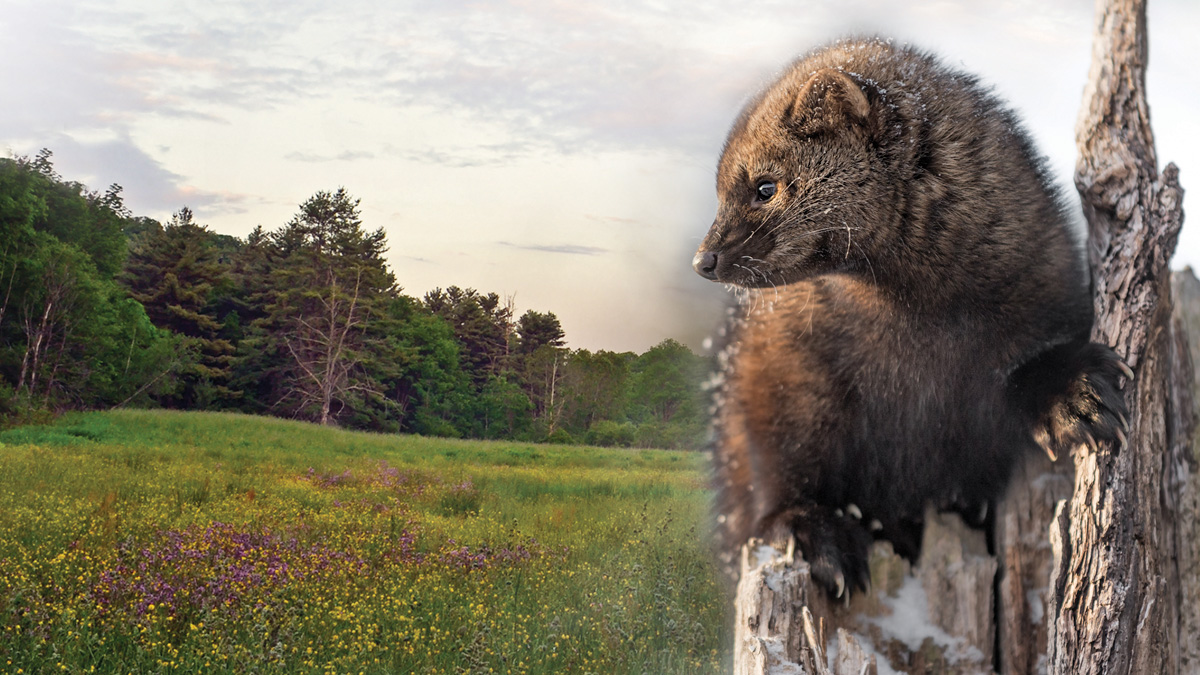
Fisher Cat

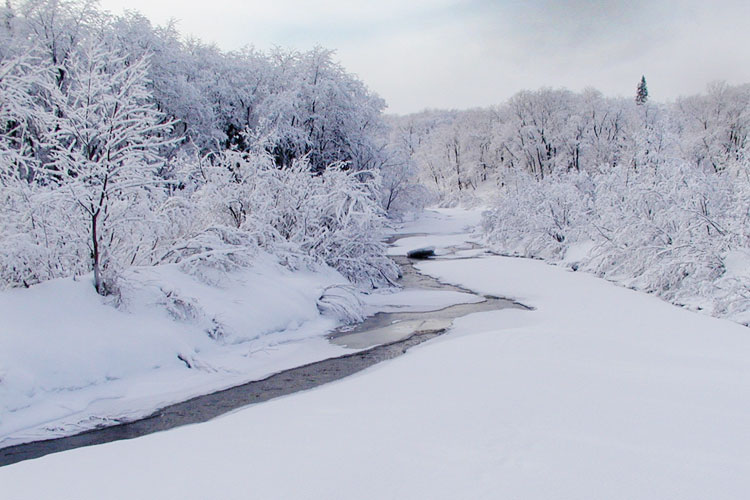
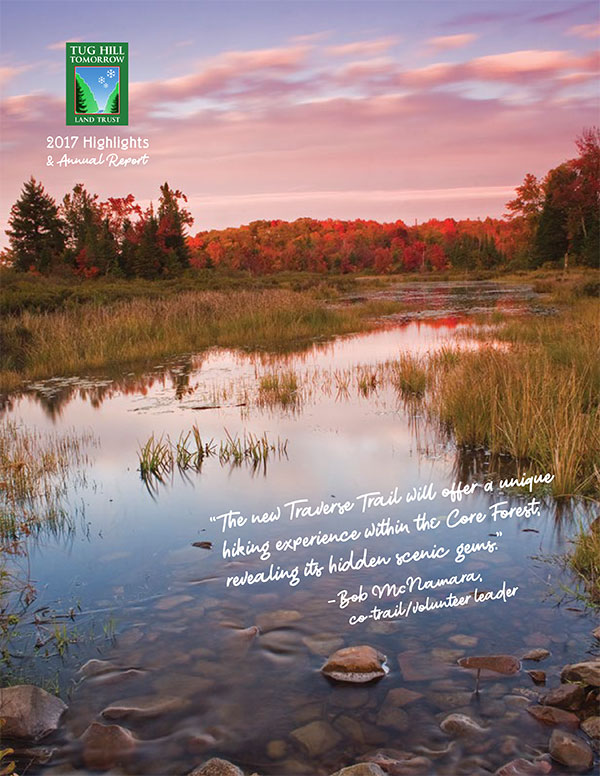
As you walk one of the old logging roads, deep in the woods, the smell of moss, decaying leaves, and balsam wafts around you. There’s a peacefulness about the place not often found in our region, with sunlight sparkling on streams and wetlands and birds calling overhead.
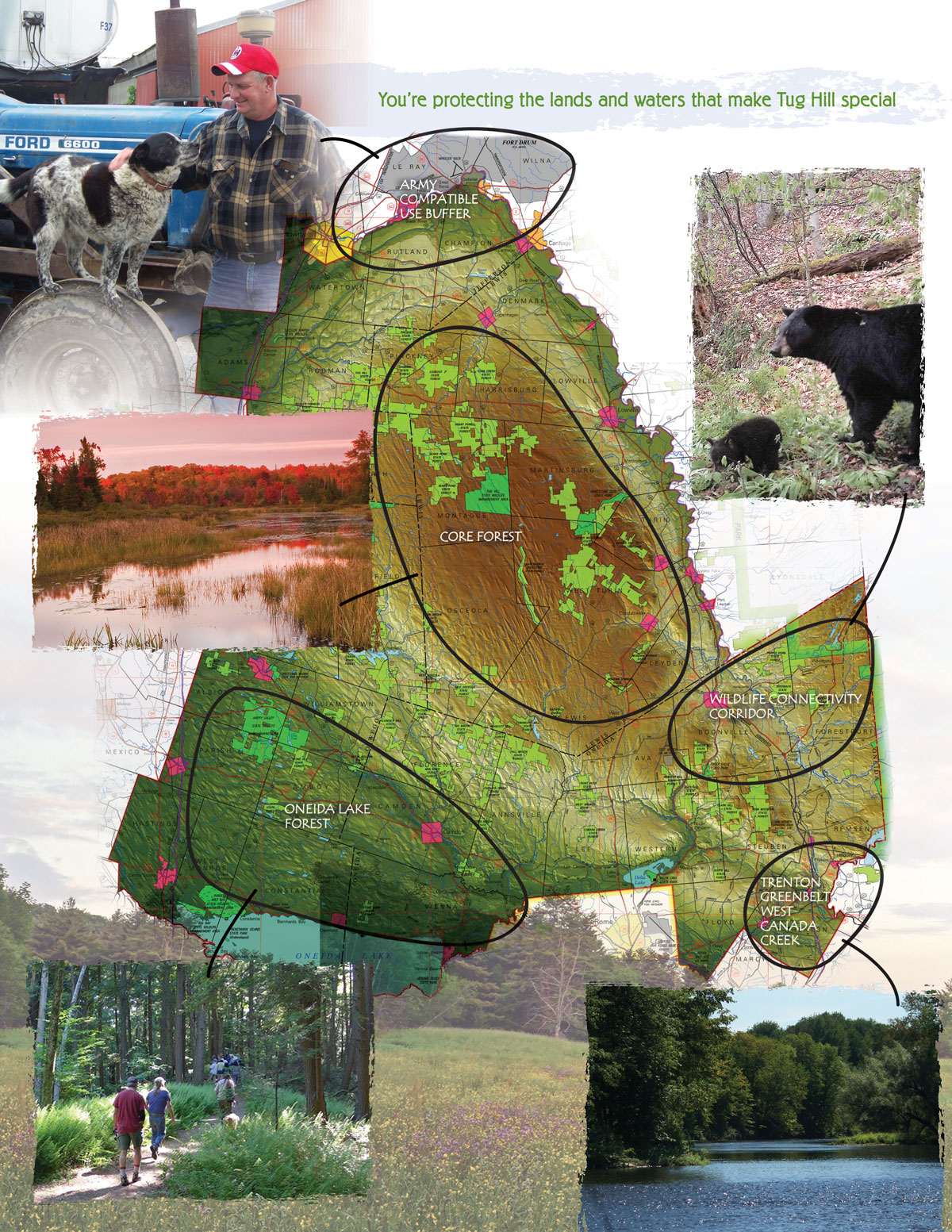
Tug Hill Region Map

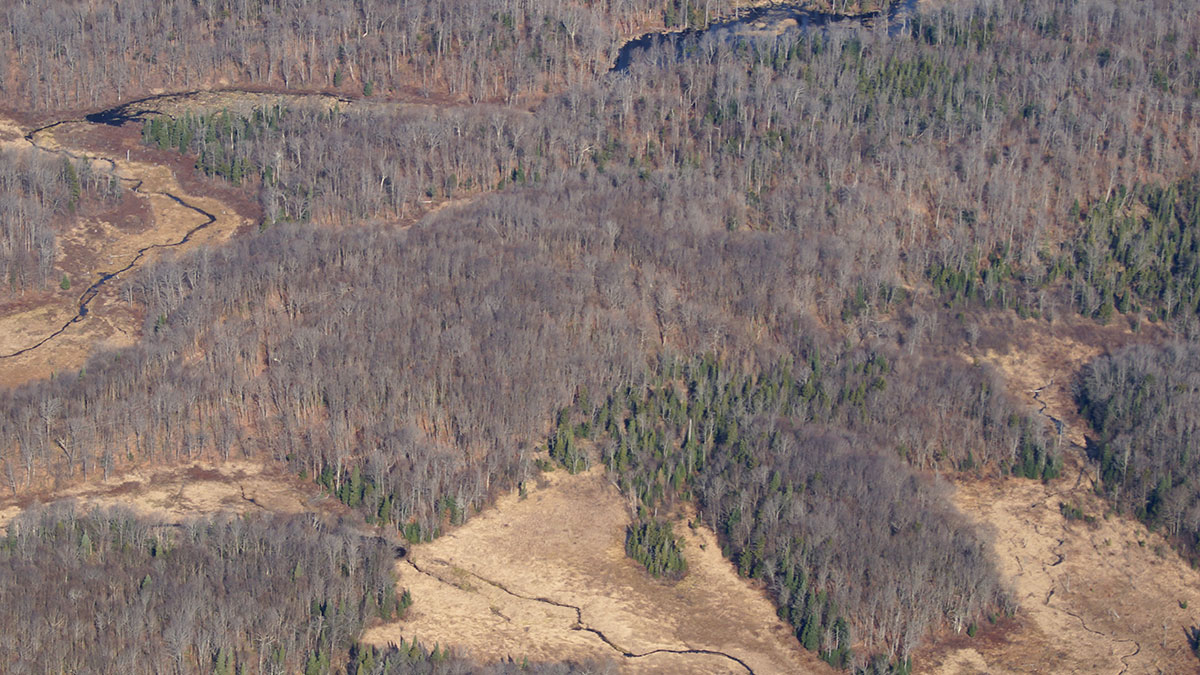
Here in Tug Hill’s “Core Forest”, an area that spans over 150,000 acres and includes parts of the Towns of Worth, Redfield, Montague, Martinsburg and Osceola, we are immersed in an amazing place for wildlife and our community alike. The Core Forest also includes the headwaters of six major rivers: the Mad River, Deer River, Salmon River, Sandy Creek, East Branch Fish Creek and the Mohawk River.

The mix of northern hardwoods like beech, birch and maple with intermittent wetlands, form a giant sponge that reduces area flooding by absorbing rainfall and slowly releasing it into nearby streams and rivers.

During droughts and periods of increasing extreme heat, wildlife and plants rely on the Core Forest to survive. “We often think about the importance of the vast woodlands of Tug Hill’s Core Forest from a forestry perspective,” remarked Gregg Sargis Director of Ecological Management for The Nature Conservancy Central and Western New York Chapter, “but the waters of Tug Hill are critical for wildlife and plant communities as well as the towns of the region. That’s why it’s a priority in the NYS Open Space protection plan.”


The 150,000-acre Core Forest is helping to combat climate change by absorbing carbon dioxide, one of the key heat-trapping gases accelerating climate change.
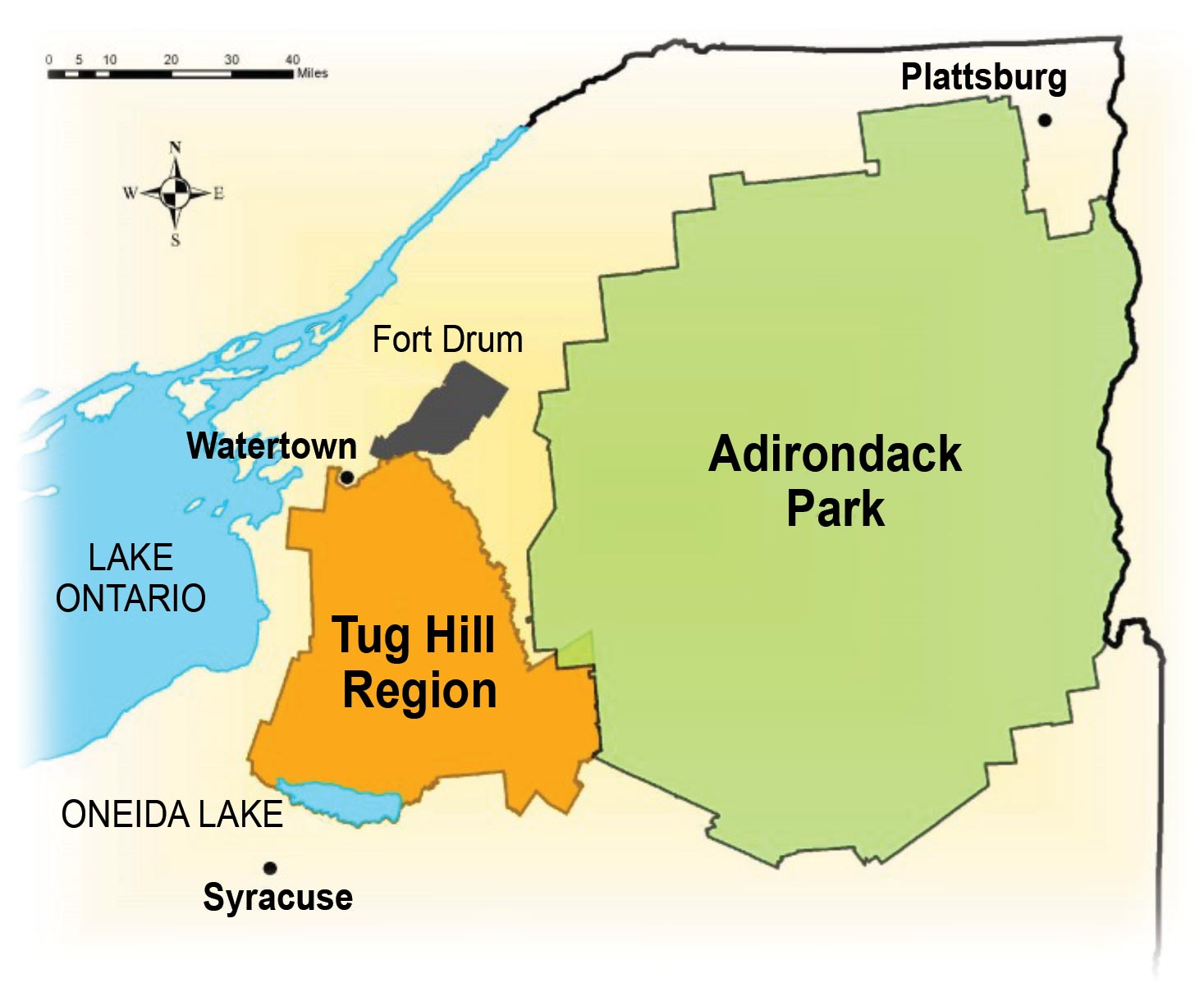
 

Tug Hill Locator map

Drinking water, habitat, and need for protection

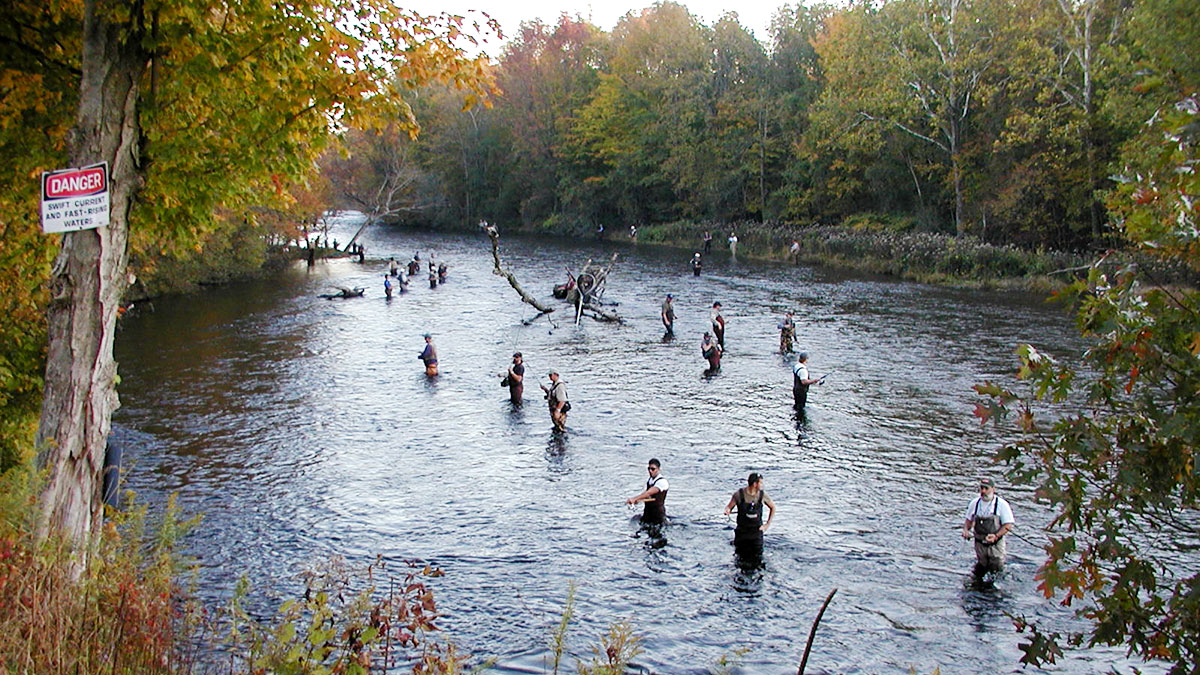
Fishing and kayaking are frequently associated with these waters, but let’s not forget that the City of Rome and several other rural communities depend on the naturally filtered water from Tug Hill for their drinking water. It also provides critical habitat for wildlife who need uninterrupted places to raise their young, like the northern goshawk, bobcat and the shy fisher.

It took a decade of partnerships with timber companies, hunting clubs, recreationists, town officials and local landowners to conserve approximately one-third of the Tug Hill Core Forest.
2017 Annual ReportNow, recognizing the importance of the remaining areas, Tug Hill Tomorrow Land Trust is working with a variety of landowners and partners to continue the protection efforts.

It’s a landscape that’s not easily forgotten. Together, we are creating the next conservation chapter of the Core Forest.


Read this story and others in our 2017 Annual Report 
Because it’s part of who we are…

Gleisner Farm

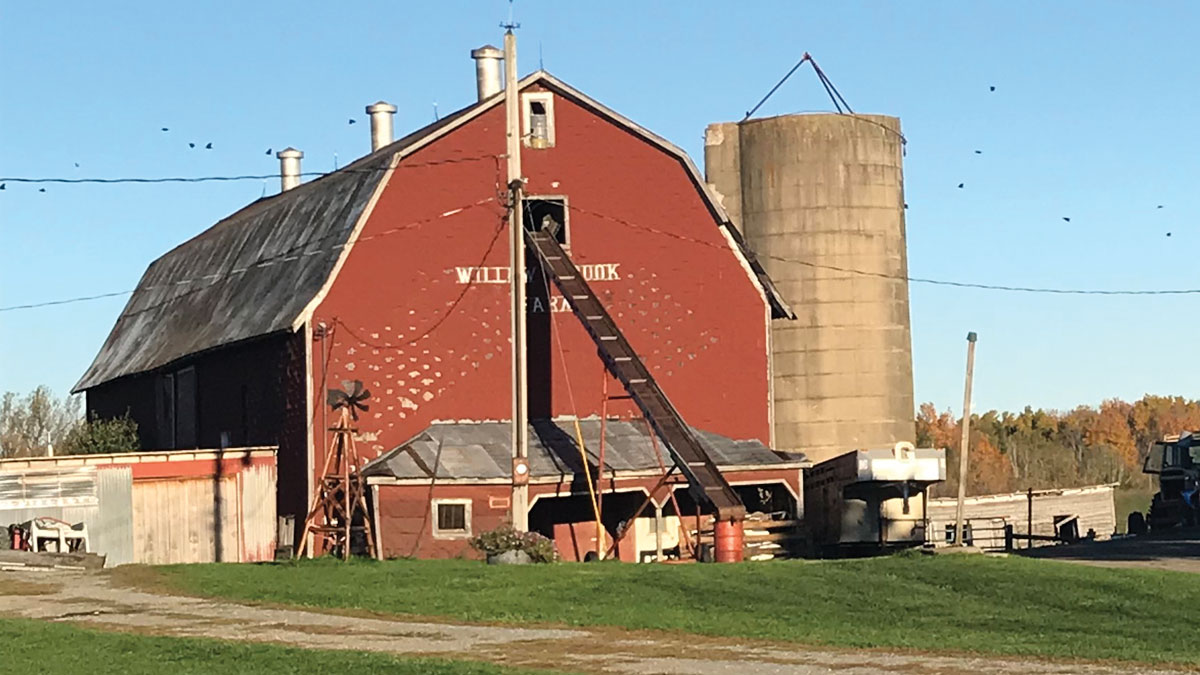
Looking out from the hilltop, over the barns and pastures as the sun rises and the warm glow creeps across the sky, you’d think you were lost in another time.

The heifers call, anticipating breakfast; the geese flying low overhead note their descent to the near-by river. It’s almost quiet, at 5:30 in the morning, and up here on the hill is one of the special places that Dean and Shelly Gleisner, think about when they wondered if they should conserve their land.

“Sitting right next to Ft. Drum, our farm could become really valuable for commercial development as opposed to agricultural. But our family didn’t want it to be lost to development, we’ve been farming for generations and its part of who we are” reflected Dean.

The 147-acre farm, located in the town of Philadelphia, is a mix of fields, pastures, and woodlands with a couple of streams meandering through. Pileated woodpeckers and great horned owls inhabit a portion of the woodlands, where their calls pierce the early spring mornings.

It sounds idyllic, but it’s not been a life without challenges

“We lost about everything about 25 years ago in a barn fire,” reflected Dean, “it was an awful time in our lives, but our community came together for us and we pulled through.

“We thought about leaving farming, but it’s the farm that has defined our family. It’s part of our bones, it’s really who we are,” explained Shelly. So Shelly and Dean, and their kids, pulled together and kept farming—this time focusing on beef cattle and dairy cow replacement heifers.

A great way to raise a family

“Farming’s not easy, but it’s a great way to raise a family, it’s a great way of life, and that’s why we still have it. My three kids all grew up farming. Ryan is my youngest and at 17 and he’s in a BOCES program; he enjoys operating equipment and helping out on the farm. They have to know it from a young age to go into farming. Katelyn, my eldest, loves to come home for the holidays and Gregory works with me as part of the beef operation.”

“Our whole family is, or has been, in farming, and now they’ve all decided to conserve their farms,” Dean says, continuing, “first it was my brother Charles, and then Billy did it. We knew we were going to do it too but wanted it to be the right time. We wanted to make sure that this farm stays a farm, or at least open land, for generations from now.”

2017 Annual ReportAnd that’s exactly what the Gleisner family has done. Working in partnership with the Army Compatible Use Buffer program, and the Tug Hill Tomorrow Land Trust, they’ve conserved their land and in so doing, they’ve also helped ensure that Fort Drum won’t be surrounded by incompatible development that would hinder it’s military training.

Read this story and others in our 2017 Annual Report 
 

“You know what they say, you can take the kid off the farm, but you can’t get the farm out of the kid…or something like that. That’s what its like for us. It’s who we are and who we want to be. We feel blessed to live here, on the farm we love.” 

– Sally


Quick facts about farmland protection and ACUB

Tug Hill Tomorrow Land Trust works in partnership with Fort Drum, and Ducks Unlimited, through the Army Compatible Use Buffer (ACUB) program to conserve lands that are important for national security around the army base.

Here are some quick facts:

1. The U.S. Army initiated the ACUB program to address the growing concern of development, which can lead to encroachment around the perimeter of military installations.

2. All projects are voluntary. Farmers contact our land trust and we work with them and Fort Drum to clarify if their land will qualify for ACUB funding.

3. The landowner continues to own and manage the land and pay taxes subject to the conservation agreement (called a conservation easement).

4. The landowner receives a one-time payment for their non-farm development rights, as determined by a qualified appraisal.

When conservation connects, close to home

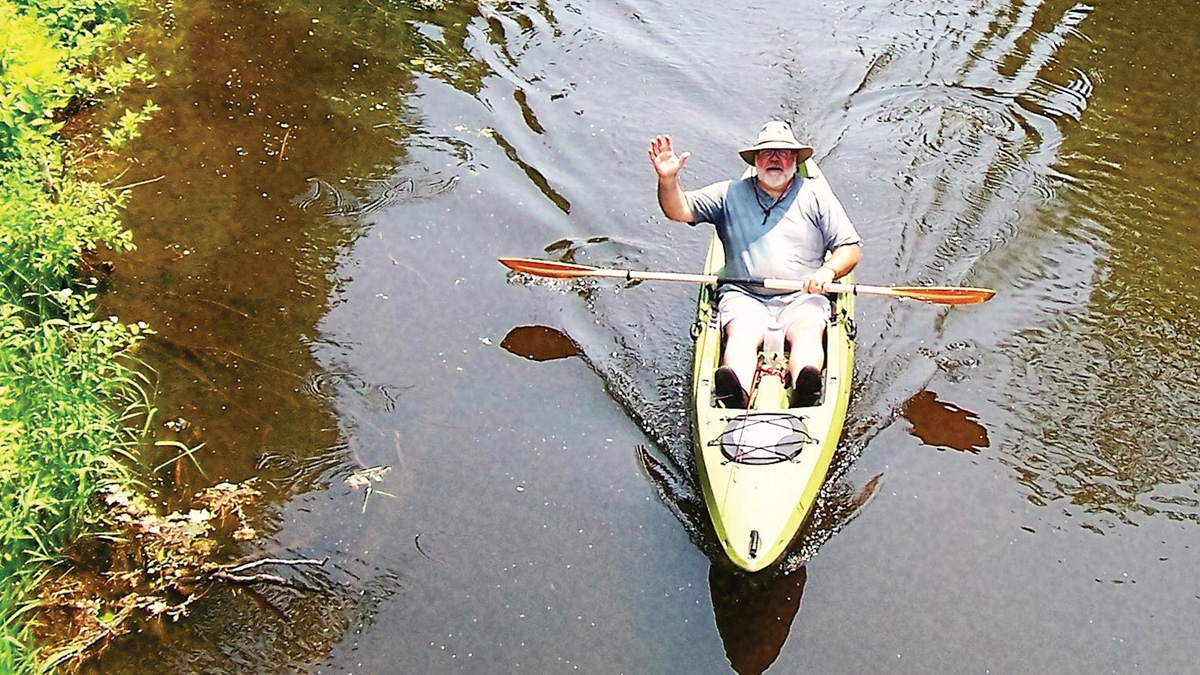
Kayak on Black River

For land conservation to withstand the test of time, future generations have to care about it and the land trusts who conserve it. Yet new research from the Land Trust Alliance, the national service organization for land trusts, has again confirmed that most Americans don’t see the benefits of land and water conservation—or land trusts—in a tangible way.

skiersThat’s one of the reasons why, as part of our commitment to conserving land and water in perpetuity, we are ramping up our efforts to work with area partners like local libraries, schools, after-school and summer programs, and home-schooling groups to bring them to conservation—and conservation to them.

We also know we need to provide safe, interesting, and accessible places in nature (and farms) to develop lasting connections. Other research by Cornell University has shown that regular, positive, every-day experiences outdoors, close to home, often in the company of others, is critical—even in rural areas.

Local conservation areas, “close to home” (ideally within a 20-minute drive so it’s easy to get to) with trails designed for a variety of people is one of the ways families and friends can spend time together, away from technology, creating memories.

Opportunities to connect with nature

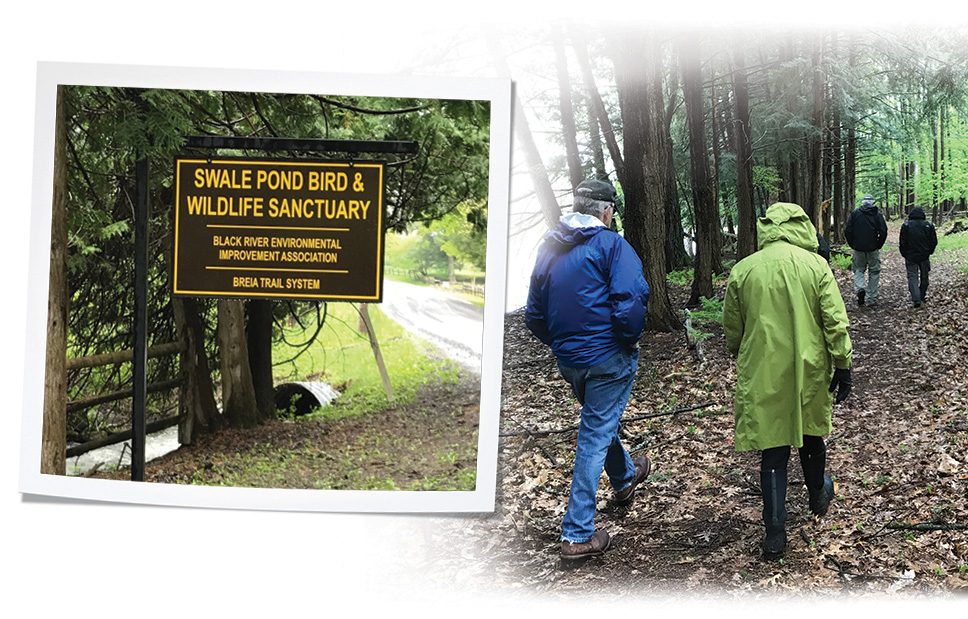
One of the newest places to explore is off Partridge Hill Road, near West Canada Creek, in the Town of Russia in Herkimer County. The Black River Environmental Improvement Association (BREIA) is building on its commitment to helping people, especially families, experience nature. BREIA recently purchased land previously protected by a Tug Hill Tomorrow Land Trust (THTLT) conservation agreement and created the Swale Pond Bird & Wildlife Sanctuary with a network of public trails. “This is great news. It’s imperative we get kids outside to build their self-esteem and  sense of compassion for nature,” explains Linda Gibbs, THTLT’s educator, “we look forward to partnering with BREIA in the future.”

The Joseph Blake Wildlife Sanctuary is another such example. Owned by THTLT, and managed in partnership with volunteers, it’s located just 15 minutes outside of Watertown with a network of trails open all-year long. It’s a beautiful place, one where THTLT regularly hosts free programs for families and school groups.

Just the beginning

This coming year, with the support of people like you, we’ll be expanding our community programs with area kids and families, as well as partnering with other organizations like BREIA to inspire compassion for each other and for the land. We’ll also be helping establish new conservation experiences like the 20-mile Tug Hill Traverse Trail that will run north-south from Osceola to Montague and when complete, will provide the first ever long-distance trail on Tug Hill.

2017 Annual ReportThat’s part of our commitment to ensuring that the lands you love will be here well into the future. And we couldn’t do it without you.

Read this story and others in our 2017 Annual Report 
 

Did You Know?

  • Studies reveal that children are healthier, happier, and perhaps even smarter and more creative when they have a connection to nature.
  • Nature has positive effects on children with attention deficit disorder, asthma, and obesity, and being in nature relieves stress and improves physical health.
  • Adults who work in spaces incorporating nature into their design are more productive, healthy and creative.
  • Hospital patients with a view of nature from their window heal faster.

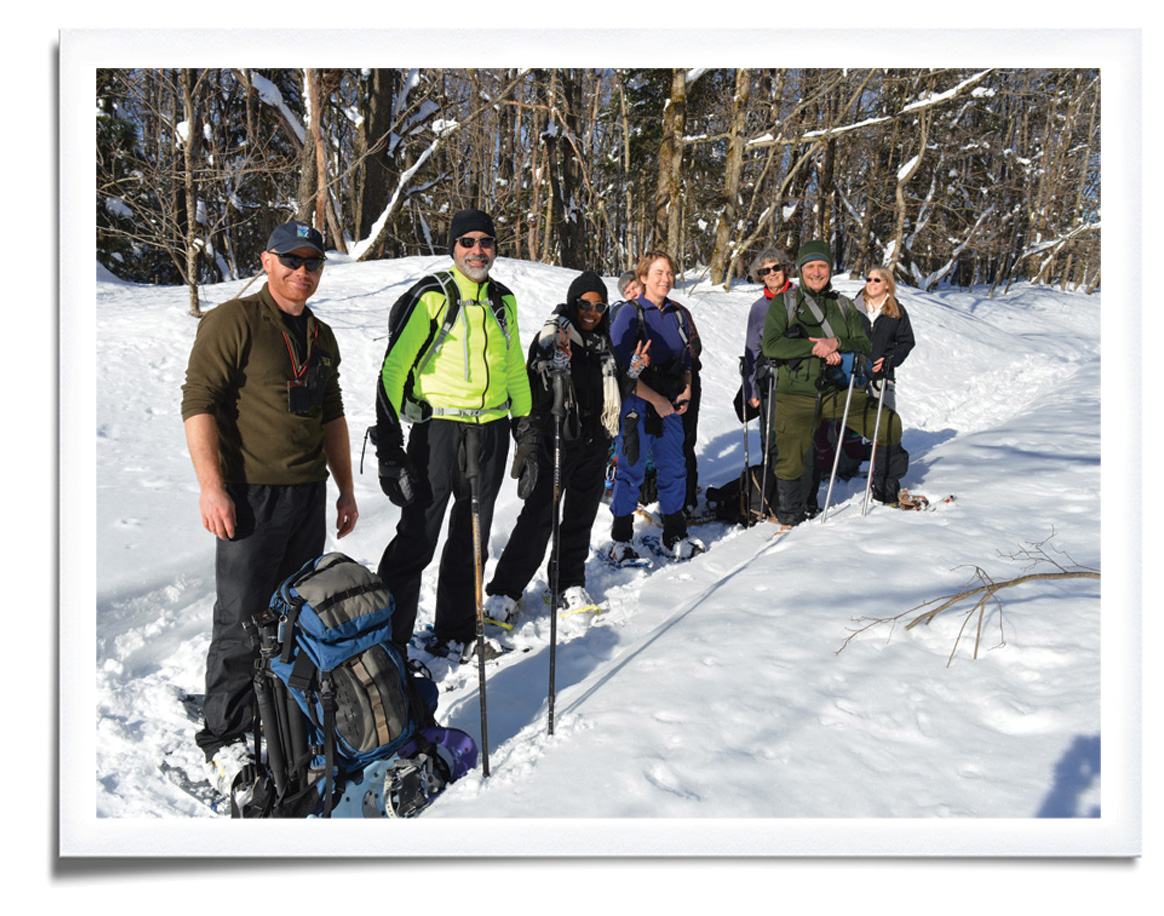
“What a day, what a special place, how wonderful being with like-minded folks & making new friends! Could not ask for more.”

– Meredith Leonard, field trip participant

Swale Pond Bird and Wildlife Santuary

It’s an Ecological Trap

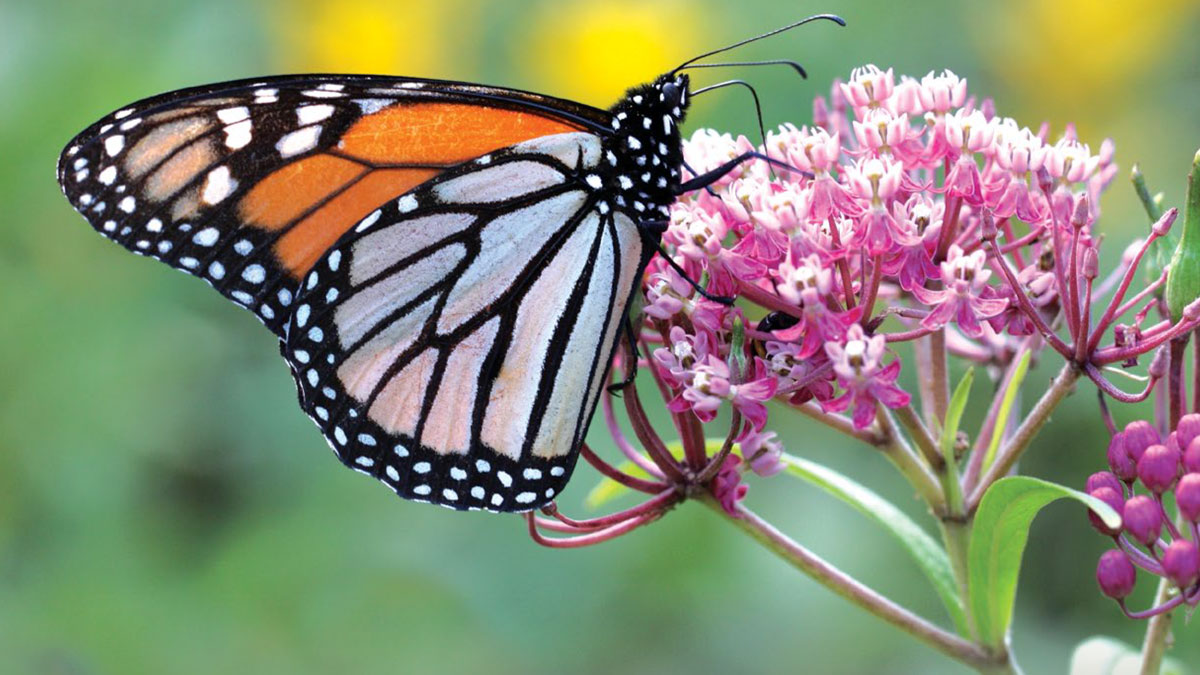
Monarch

Climate change can turn Monarch Butterflies’ favorite food into poison

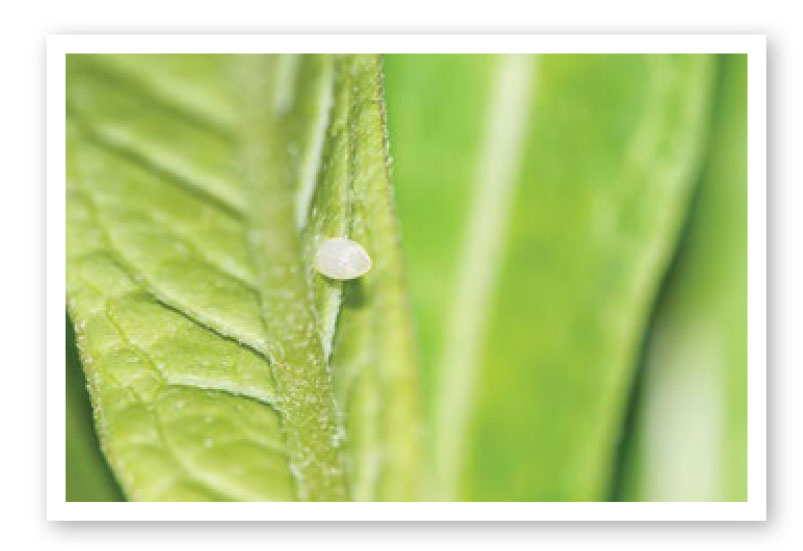
monarch egg

New research is documenting the impact of increased CO2 in our atmosphere on the plants, wildlife, farms and waterways we are all working to conserve. With CO2 levels recently, as of May, the highest they have been in 2 million years (based upon ice-core research and atmospheric testing), we are now facing increasingly serious challenges to the lands, waters and places we love.

Scientists at Louisiana State University (LSU) are investigating the relationship between climate change and species responses.

The Monarch Butterfly, already stressed because of habitat damage and pesticides, is now caught in the cross-hairs of how plants are responding to increased CO2.

LSU clarifies that there are several different species of milkweed, but they all share a common trait. They produce toxic chemicals in their leaf tissue called cardenolides that deter most vertebrate predators.


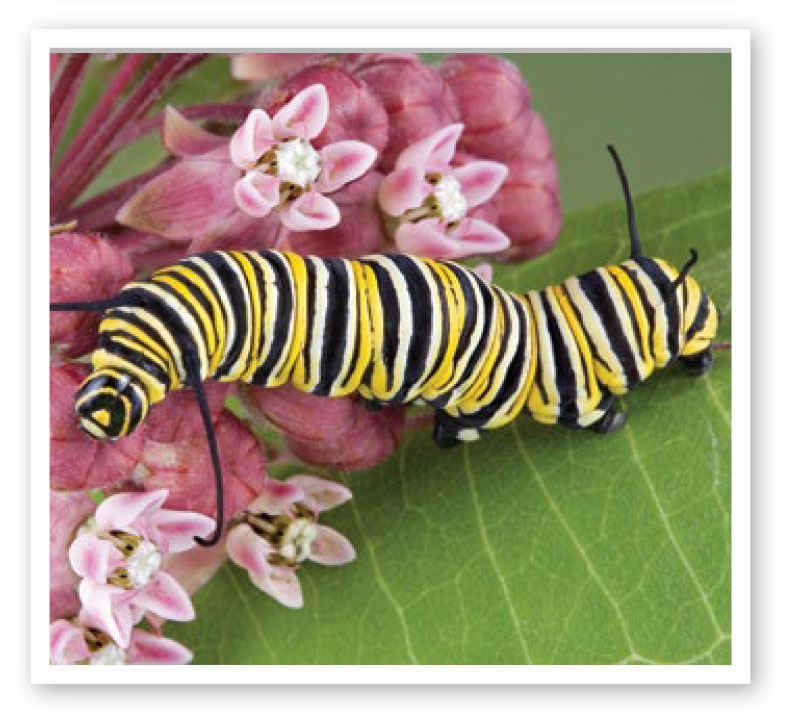
caterpillar

Climate Change and Toxins

These chemicals are in the class of cardiac glycosides that interfere with sodium potassium-pumps in the heart and other tissues and can even affect humans if ingested in large quantities.

They note that Monarchs, however, have evolved to become cardenolide-tolerant up to a certain point.

By laying their eggs on milkweed plants that contain levels of cardenolides that are toxic for their predators, Monarchs protect their caterpillar offspring from being eaten.

After hatching and chowing down on milkweed leaves, the caterpillars are full of cardenolides that make them taste nasty to most predators, such as birds. Monarch Butterflies also sequester this compound in their wings. Their contrasting bright orange and black wings signal “do not eat me” to birds such as blue jays.

But if a milkweed plant produces too much of this toxic chemical, caterpillars that feed on the plant’s leaf tissue may inadvertently poison themselves.¹ It’s a situation they are now watching, with growing concern.


Together, we can make a difference

You can help reduce the pace of climate change, and help save the wildlife, plants, and community landscapes you love.

We, here at the land trust, are working on this as well. Check out our website for ideas on how you can help.

Together, we can address the need to slow down climate change and conserve our region’s farms, wildlife, woodlands and our waterways.

The science is increasingly clear. Now is the time to make a difference. And we are pleased to be able to work with you, to help.

Learn more about Climate Change 


¹ http://www.lsu.edu/mediacenter/news/2018/04/03bio_faldyn_monarchs.php

Top of the Hill Award

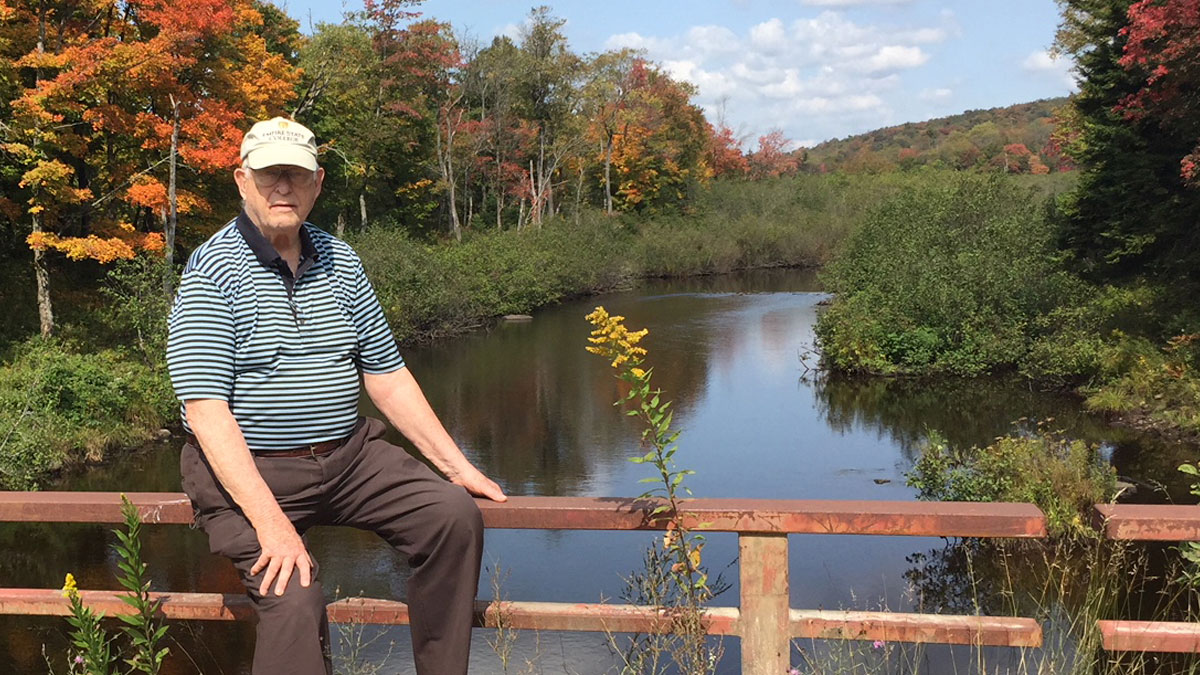
Tom Walker

It seems that Tom Walker has always been passionate about Tug Hill. As part of the Tug Hill Trekers outdoor group Tom will tell you stories of his adventures skiing or snow shoeing in the middle of “nowhere” in all that glorious snow that Tug Hill is famous for.

He’s one of those people whose enthusiasm is contagious, with a commitment for land conservation that is ingrained in his personality.

It’s that kind of life-long love of Tug Hill, and unwavering support year after year, that made Tom the obvious recipient of the “Top of the Hill Award” at the 2017 Annual Dinner held at the Tug Hill Vineyard.

“I was a bit stunned, but I guess it’s true: I love this area, and I love helping others conserve their lands by my support of the land trust” exclaimed Tom, “because once this land is gone, it’s gone for good and we can’t let that happen.”

This is the second time we have presented the Top of the Hill award. It was first awarded to board member Dick Hill, on his 90th birthday. The award now to recognizes a donor of a certain age who embodies Dick’s dedication to nature and Tug Hill, honoring Dick’s legacy.

Concerned Wind Facility Will Hurt Forests, Salmon River, Hunting, Fishing, Fort Drum, Economy

Core Forest
Tug Hill Core Forest by McNamara
Tug Hill Core Forest by Robert McNamara.

Tug Hill Tomorrow Land Trust told the New York State Public Service Commission that it is concerned a major industrial wind energy facility proposed for the center of the Tug Hill region will harm the region’s forests, wildlife, water quality in the Salmon River, hunting and fishing opportunities, economy and the future of Fort Drum.

The Land Trust’s concerns focus on the proposed Mad River industrial wind energy facility that is proposed for the Tug Hill core forest in the towns of Worth and Redfield, east of Sandy Creek and Pulaski, New York.

“We support wind and other renewable energy that can reduce our dependence on fossil fuels and help protect our environment, but that does not mean that every location is right for wind energy facilities, especially large industrial facilities like those proposed by Atlantic Wind LLC in the Tug Hill core forest,” said Land Trust Executive Director Linda Garrett from the organization’s headquarters in Watertown.

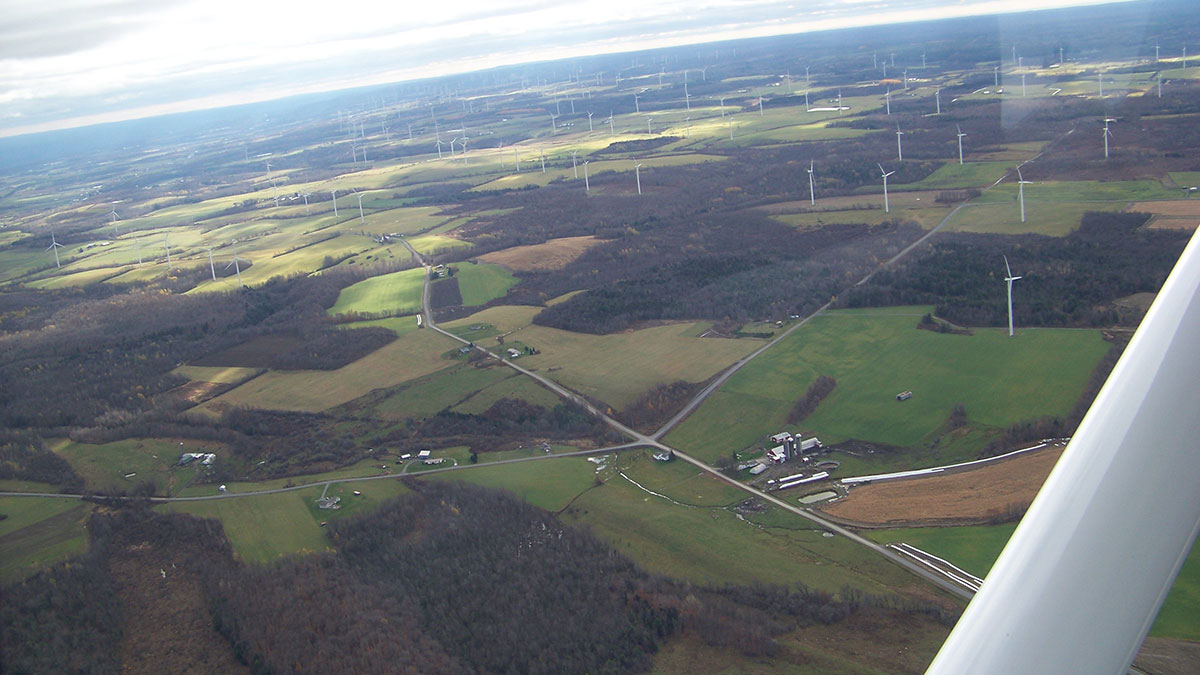
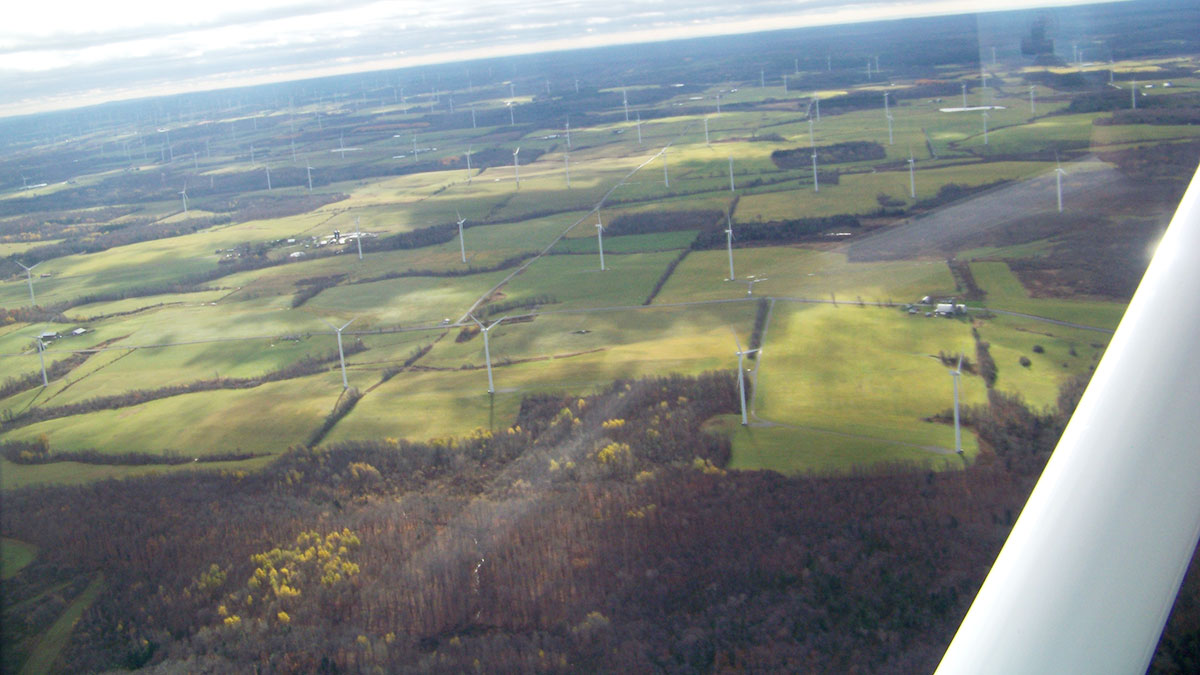
Recent public notices about the Mad River proposal have referred to a 200-acre footprint on the Mad River site. Noting this description does not accurately portray the proposed project, Garrett states that the project will entail “88 wind turbines on towers much taller than those we are used to at the Maple Ridge facility outside of Lowville, NY, placed across the entire 20,000 acres of the site.”

Ariel view of Wind turbines
Photo by Carol Hutchinson.

Why is the Core Forest special?

Tug Hill’s core forest covers about 175,000 acres in the middle of the Tug Hill region, known to locals, hunters and anglers as the “Big Woods” or “Lesser Wilderness.” The area is the size of about 3 or 4 upstate towns, and is characterized by few paved public roads and a wild feel that to many is the essence of Tug Hill and what many local people and visitors value most about the Tug Hill region.

Efforts to protect the Tug Hill core forest started almost 50 years ago when the New York State Tug Hill Commission was created in part in response to local concerns about the core forest getting broken up and developed, losing its wild character and perhaps jeopardizing hunting, snowmobiling and jobs in logging.

About 25 years ago, towns of the core forest, through their Cooperative Tug Hill Council, worked with sportsmen’s groups, snowmobilers and environmental organizations to protect the core forest.

Today, nearly half the core forest is protected through State forest lands, State-held conservation easement, county forest land ownership, the largest conservation area in New York State owned by The Nature Conservancy, and conservation easements held by Tug Hill Tomorrow Land Trust.


Water Quality, Fort Drum

The Land Trust cites recent work at the State University of New York College of Environmental Science and Forestry in Syracuse that industrial wind energy facilities, especially facilities of the scale proposed at Mad River, in forested areas is a relatively new practice, and as a result that we know little of the immediate or long term impacts of such development. “If the Mad River project is ultimately approved, it will have to be carefully monitored throughout its lifetime to learn more about impacts on forests,” said Garrett.

Tug Hill fishing
Photo by Robert McNamara.

The Land Trust also has concerns over potential water quality impacts of the project, especially since it is in the headwaters of Salmon River, one of the nation’s premier sport fishing rivers, and an essential part of the economy. The proposed wind facility project is also close to the Tug Hill aquifer, a groundwater resource vital to homes and businesses in the region.

While the Land Trust’s focus is on the Mad River proposal, it also has concerns about the number of industrial wind facilities proposed for the portion of Tug Hill close to Fort Drum.  “No one seems to be looking at cumulative impacts of the wind facilities proposed on wildlife, the National Weather Service’s advanced forecasting radar in Montague, NY, and impacts on Fort Drum, a top military training facility in eastern U.S.,” said Garrett.

Tug Hill Tomorrow Land Trust works with the Army, Ducks Unlimited, and New York State to limit development on farm and forest lands near Fort Drum, so as to minimize conflicts between essential training operations at the Fort and residents who live near the base and its airfield and bombing ranges.

“We can’t take chances with limiting training options at Fort Drum. That could jeopardize the future of the Fort, its more than $1 billion contribution to the economy every year, and our national defense,” commented Garrett.

“By participating in New York State’s review of the proposed wind facility we hope to see mitigation of all or many of the potential negative impacts, and to provide a means of eventually keeping this 20,000 acres of Tug Hill core forest undeveloped,” said Garrett.

For more information review this website or call 315-779-8240.

Wind turbines

Conserving tradition

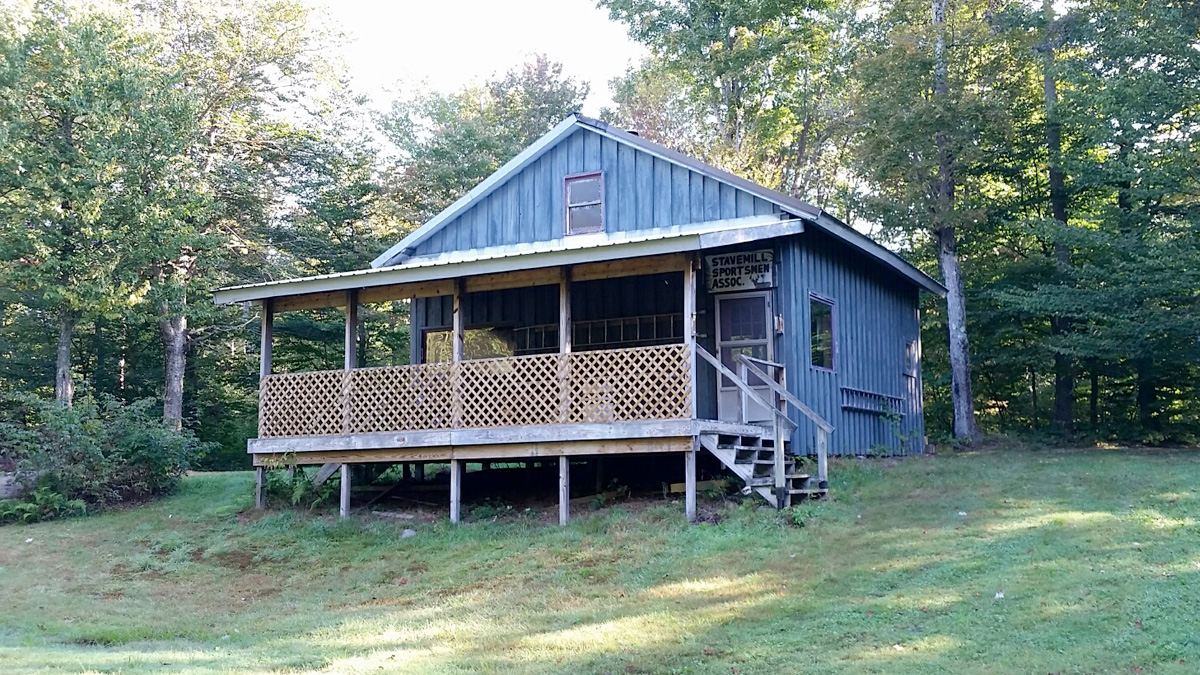
Stavemill Hunt Club House

Mitch Yerdon has spent much of his life—40 years of it—out hiking these woods, hunting with friends and spending time at the camp. There have been bitterly cold mornings, up before dawn, where you can feel the cold snap at your eyeballs, making them prickle in the early light. Other times, there’s been lunch over the stove at the camp, telling stories and discussing what it was like as a boy, to grow up here in Tug Hill.

One thing is certain. For Mitch, and those who belong to the Stavemill Hunting Club, LLC, a small hunt club, the lands they have historically leased is part of who they are; “it’s become like family,” remarked Mitch.

All that was put at risk when Harden Furniture, which owned over 3,000 acres of forestland the club leased in the towns of Redfield and Orwell, in Oswego County, sold the land to a forest investment company who in turn, needed to sell the land.

Redfield Kendall Property
Redfield Kendall Property Working Forest Fund NY. “It’s a really good solution,” said Michael Yerdon, President of the Stavemill Hunting Club, LLC. “Hunting is part of the culture and heritage of Tug Hill, and local camps are often a major
part of that.”

Once it’s gone…

The towns, and the hunt club, recognized an opportunity to keep the land intact for hunting, fishing, snowmobiling and other recreational activities, rather than seeing it get chopped up by scattered development.

“We see this land is an important part of the economy—people come to this region to hunt, fish, hike, and snowmobile,” explained the Town of Orwell Supervisor, William Potter.

The Conservation Fund, a national conservation organization, stepped up to purchase the land and transferred it to the State to become part of the State Forest System this past spring; the state continues to pay the property taxes as part of its conservation agreement with local towns in Tug Hill.

Not that easy

But even then, the hunt club might have lost its camp. That’s because state law requires that private leases be phased out even if they’ve been there for generations.

Working with The Conservation Fund, NYS Department of Environmental Conservation, the Tug Hill Commission, and our land trust, a strategy was created to allow the hunt club to keep its camp and ensure the land wouldn’t be developed in the future in an incompatible way.

Now, thanks to this creative plan, the hunt club will purchase six-acres of the land around their camp at the conservation value, subject to a conservation agreement held by Tug Hill Tomorrow Land Trust.

“We want to find a way to allow the important forest lands to be conserved for these uses, and honor the heritage of the long-term hunting camps,” remarked Michael Yerdon, President of the Stavemill Hunting Club, LLC. “This is a great example of a partnership that’s making that goal possible.

A path to a magical place

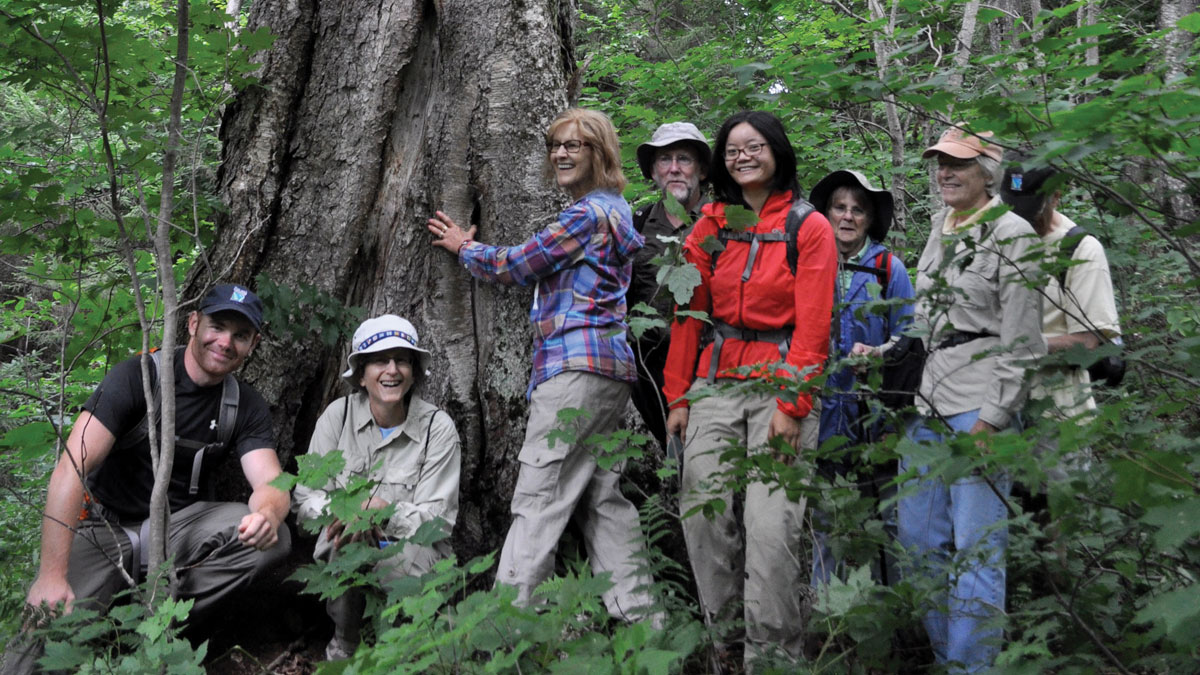
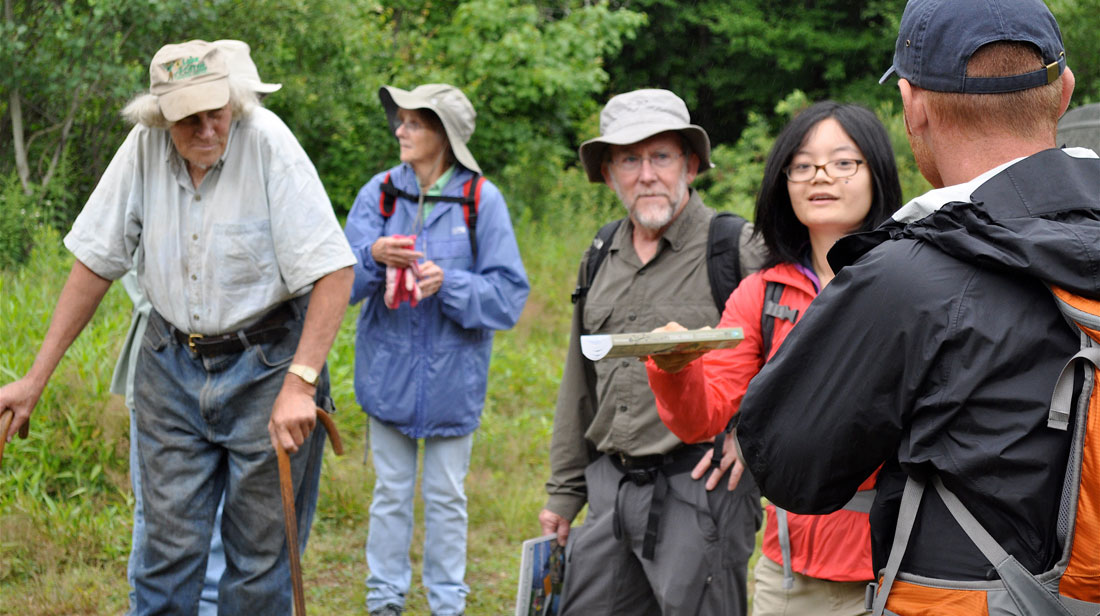
EBFC Exploratory Hike

Have you sensed that Tug Hill’s been missing something? As beautiful as it is, as lucky as we are living here, we’ve been lacking something that other special places treasure in their community and tout as economic development.

Unlike other areas, we haven’t had a long-distance trail to allow people to experience the wildness, beauty, and solitude of Tug Hill. Bob McNamara, a local naturalist and passionate birder, is working to change that. Bob, along with a dedicated group of volunteers, is leading a community effort to design, and construct, a 20-mile primitive hiking trail right down the center of Tug Hill.


EBFC Exploratory Hike
© Loretta Lepkowski


A special place

Known as the core forest, this area is dense and at times hard to navigate —but it’s full of beautiful mature trees, and the East Branch of the Fish Creek flows through the forest.

“This is a region where Tug Hill Tomorrow Land Trust has been partnering with a variety of stakeholders to protect this land for a long time,” remarked Bob, who is also a board member for the land trust.

Locals know how special this place is, and in 2006 through a unique collaboration of local communities, hunting and other recreation groups, conservation groups and the state, over 45,000 acres were protected.

The deal secured the drinking water for the City of Rome, hunting and other recreational activities for the public, and allows timber management.


A partnership and shared vision

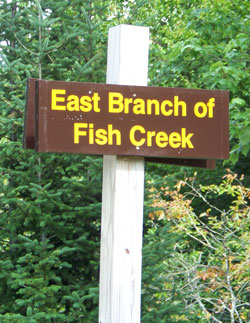
Fish Creek Sign“It has been a real team approach to making this trail a reality,” noted Bob, “crossing lands owned by New York State (NYS), private lands subject to NYS easements requiring public access, and lands owned by The Nature Conservancy.”
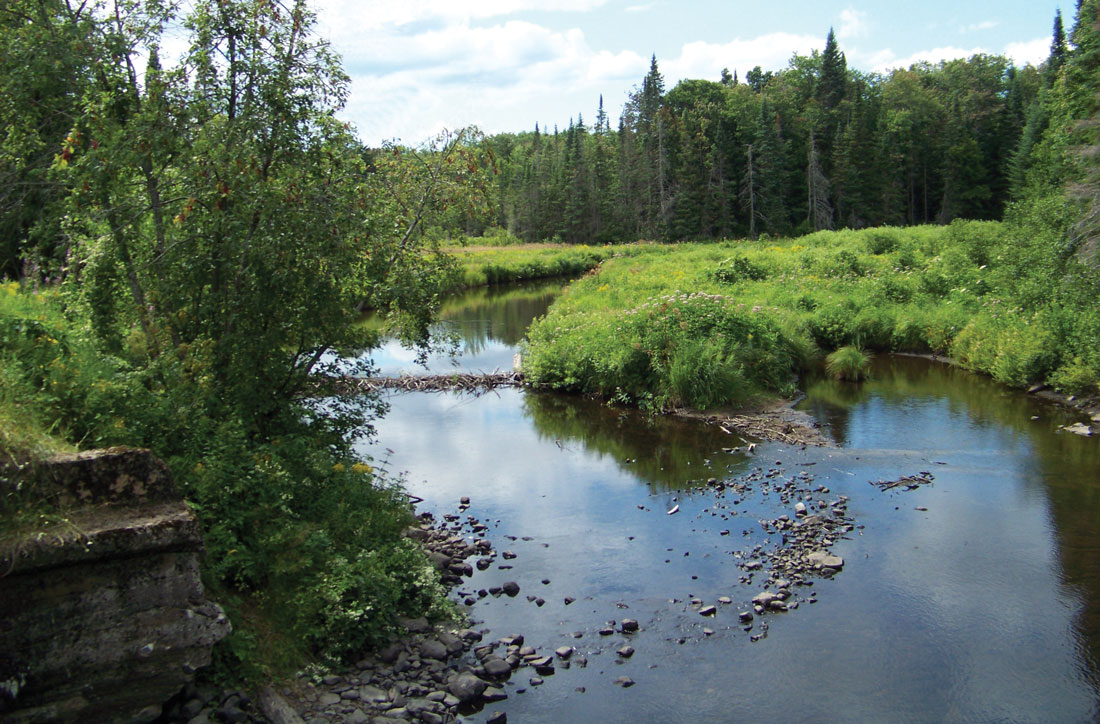
Until now the Tug Hill core forest has been devoid of a foot trail that is open to public access. This trail will allow hikers and skiers to explore the heart of Tug Hill and visit a wide variety of wild Tug Hill landscapes.

The trail is off to a great start, with initial design and flagging taking place last fall to kick start the project. We can’t wait to work with you to make this dream a reality.


Want to help?

If you’d like to volunteer with trail creation and maintenance, please call Lianna Lee or email her at [email protected]. You can spend as little as a couple of hours, or as much as a couple of days—we appreciate any time and talent you can offer.


Below, East Branch Fish Creek

East Branch Fish Creek

Venerable Folks of Tug Hill at TAUNY

Venerable Folks Radio

tug hill folks

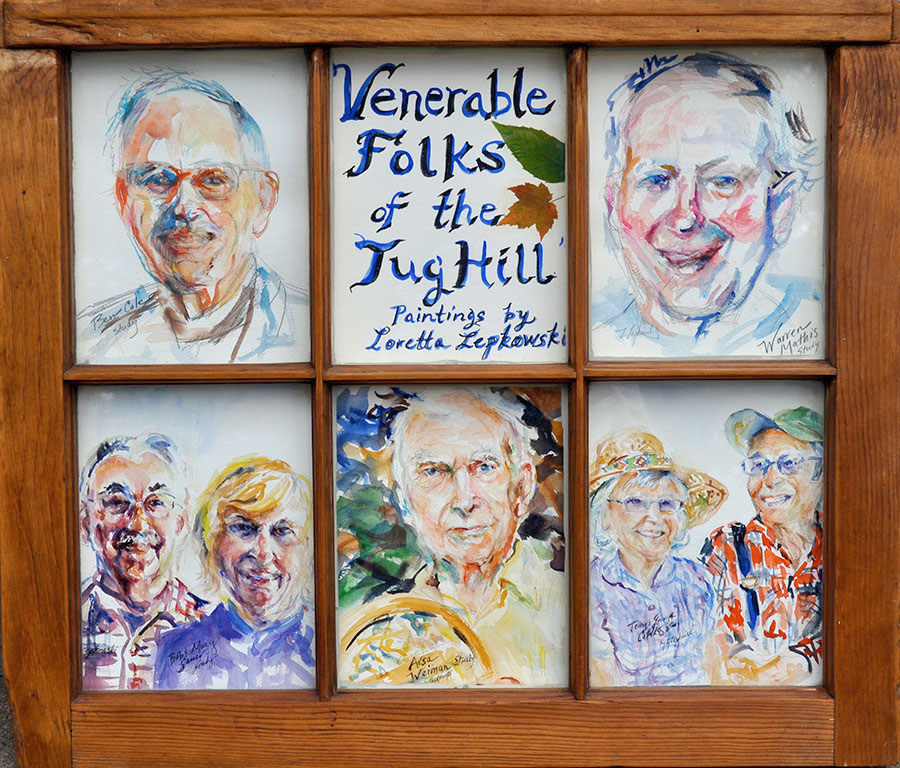
Traditional Arts in Upstate New York hosts an opening reception on Saturday, February 11, 1-3 pm, for an expanded version of the traveling exhibit “Venerable Folks of Tug Hill.” The exhibit celebrates the resilient population of the snowy Tug Hill region and its many villages, farms, and vast wilderness located between Lake Ontario and the Adirondacks.

Last year, TAUNY, the Tug Hill Tomorrow Land Trust and Tug Hill Commission produced a traveling exhibit featuring residents of the Tug Hill and their life-long involvement in the region. That exhibit, which has been touring the Watertown region since last fall, features portraits of Tug Hill residents painted by artist Loretta Lepkowski as well as panels featuring the individuals interviewed and key aspects of life in the region, including surviving winter,and  the importance of community life, and music.

Camilla Ammirati, Director Research and Programs at TAUNY, said the new exhibit is an extension of artist Loretta Lepkowski’s portrait exhibit.

Listen to the Radio Podcast


North Country Public Radio
Todd Moe, Weekday Morning Host and Producer

You and the birds make conservation and kids thrive

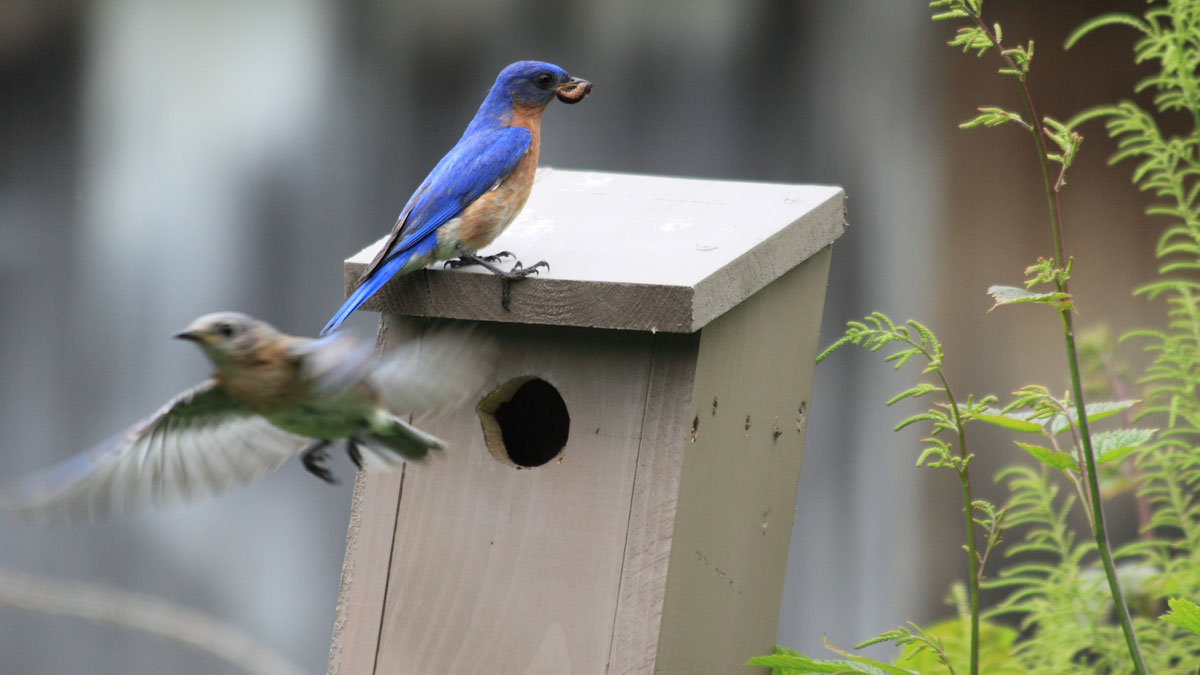
bluebirds

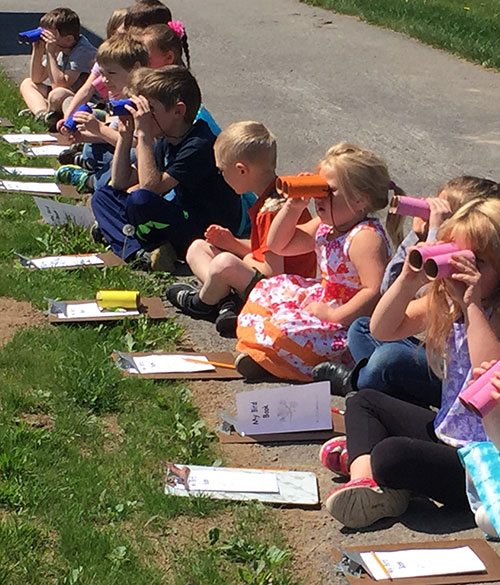
How do you get a group of energetic second graders to be quiet for 15 magical minutes? Put up a bird feeder and wait for the birds to arrive.

binoculars
© Melissa Pond

Susan Jeffers, a teacher at Mount Markham Elementary School in West Winefield, NY, knows that birds can bring science to life—for many kids,
it becomes a highlight in their day. “Tangible, interactive learning is so important,” notes Susan. “We find the Tug Hill Tomorrow Land Trust Bird Quest a spring highlight of our class.”

Research has shown that birds are a gateway to better observation and focus skills, important elements of education. It also can ignite a life-long passion for the out-of-doors. As Susan said, “It makes the kids more aware about what’s going in the world around them.” Learning to love wildlife, and have a great time in school doing it, is what the future of conservation is all about.

Through the Bird Quest students learn about the habits and habitats of birds, and how birds are important to our ecosystems. Donations from local businesses including Noble Ace Hardware, Home Depot, Lowe’s of Watertown, Walmart Super Center, and White’s Lumber allows us to provide the bird seed and bird feeders, to over 30 schools and 15 homeschool families.

An excerpt from Land Trust Alliance article “Birdwatching from the School Window” by Rose Jenkins.

Learn about our Bird Quest program