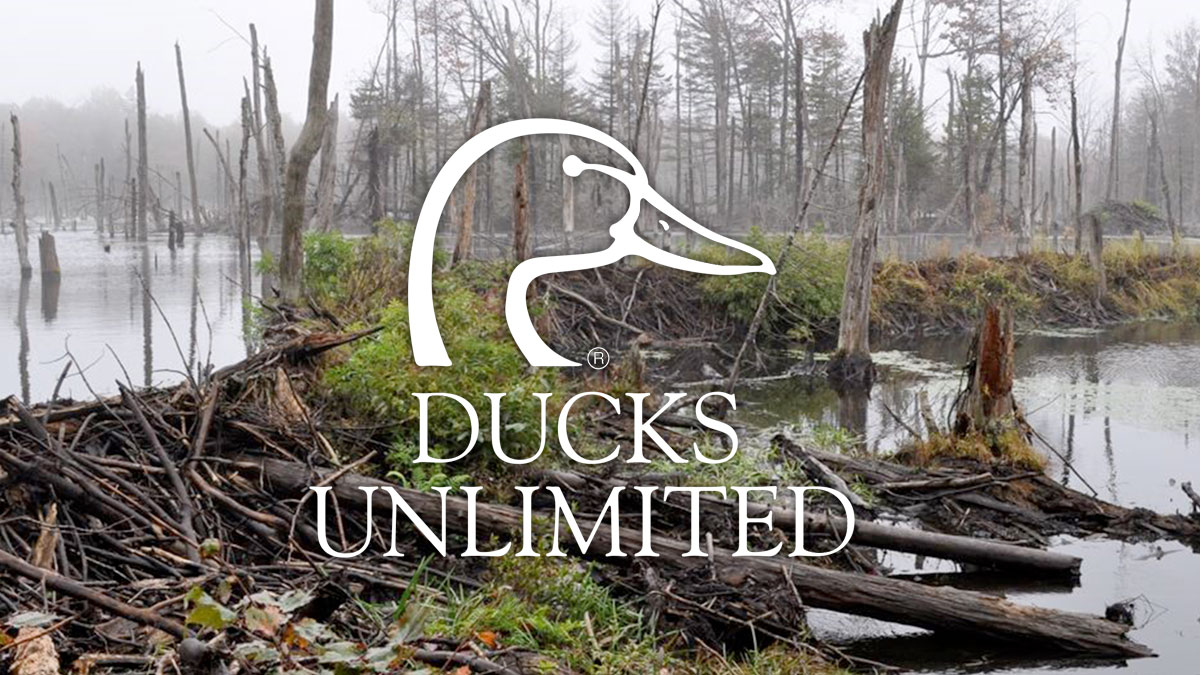
Two North American Wetlands Conservation Act grants led by the Thousand Islands Land Trust and Tug Hill Tomorrow Land Trust are supporting multiple wetland restoration and protection projects across the state.
Clayton, New York
178 acres of private land in the town of Clayton in the St. Lawrence River watershed will be enrolled into a new conservation easement with 15-acres of wetland restoration on the property slated for this fall. A conservation easement is a way to preserve property with conservation or historic wildlife value while keeping the property in its natural and undeveloped state while still maintaining private ownership of the property.
Completion: Fall 2016
Total cost: $122,000
Batavia, New York
Property 1: 87-acres of existing degraded wetland will be enhanced through reconstruction of an old berm, installation of two new water control structures and channeling and potholing to open up areas of invasive plants.
Completion: Fall 2017
Total cost: $100,000
Property 2: 45-acres of old agriculture field will be restored to wetland habitat through berm construction and placement of a water control structure to enhance management for the benefit of wildlife through improved wetland function.
Loretta Lepkowski is a warm, energetic, person who can coax a story out of just about anyone. She’s also the artist behind the “Venerable Folks of Tug Hill” portrait series profiling some of the most extraordinary people of the region in a multi-media history project.
Ben Coe, above, one of 20 people who are featured in the exhibition.
She’s teamed up with Camilla Ammirati, who works for Traditional Arts of Upstate New York (TAUNY), and together they have recorded video and audio interviews of these venerable folks to support the portraits.
These venerable folk are the hearts and souls of our communities, and inspire young and old alike. Their stories of farm life, epic snowstorms, and what life was like almost 100 years ago give us a glimpse into the people who helped define Tug Hill and what it is today.
In this age of fast-paced rapid change, it’s important to take a step back and reflect on the rich heritage of Tug Hill before it’s gone in what seems like just a blink of an eye.
This exhibit is a collaborative project between the Tug Hill Tomorrow Land Trust, the Tug Hill Commission, and Traditional Arts of Upstate New York (TAUNY) and will debut on October 20th at our 25th Anniversary Celebration. This project creatively captures the history, culture, and vitality of Tug Hill, a key part of our land trust’s mission.
Thanks to the generous support of contributors and the talent of Lepkowski and Ammirati, the history of Tug Hill will be brought to life through their stories for years to come.
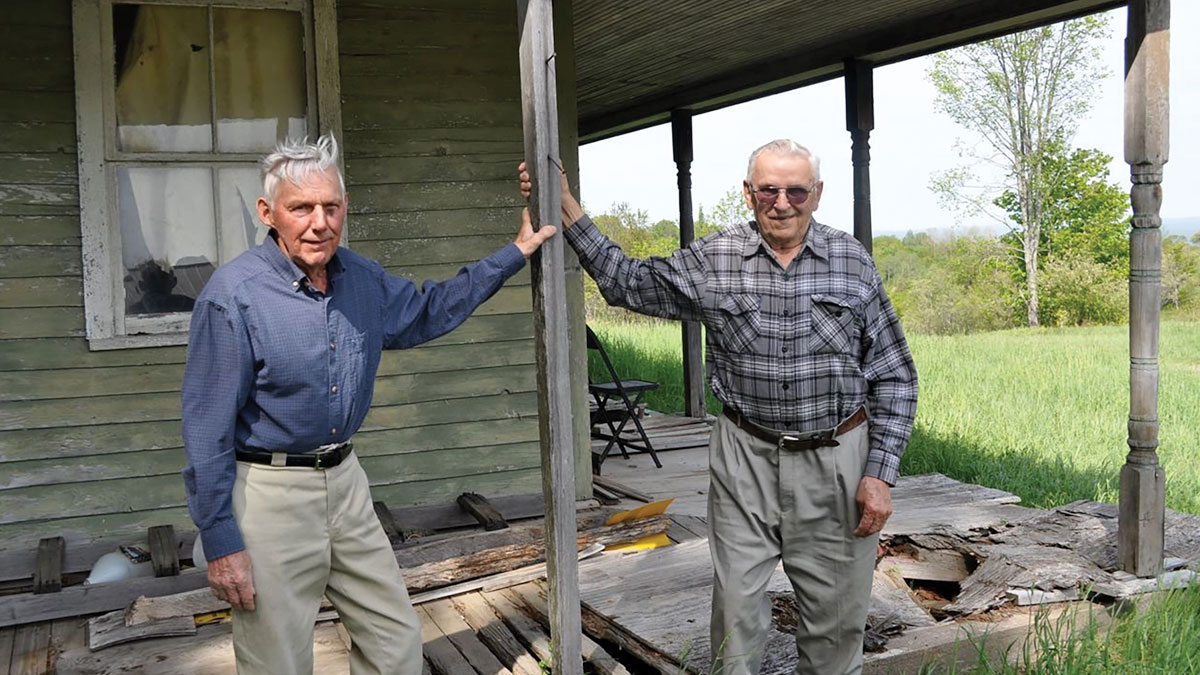
Above photograph, Stanley and Benny Szalach recall a time in their lives at their homestead.
When we conserve thousands of acres of farms and woodlands with the landowners of Tug Hill—sometimes over 1,500 acres a year—we make a pledge to be here in partnership with them, and subsequent landowners, forever.
It’s a serious pledge, and one we don’t take lightly. Every conservation agreement is unique. They are tailored to the natural features of the land
and the goals of the landowner.
In accordance with national conservation standards, we meet with each landowner annually to ensure that vision is still intact and that they have the information they need to continue their conservation efforts.
Mission that might be impossible
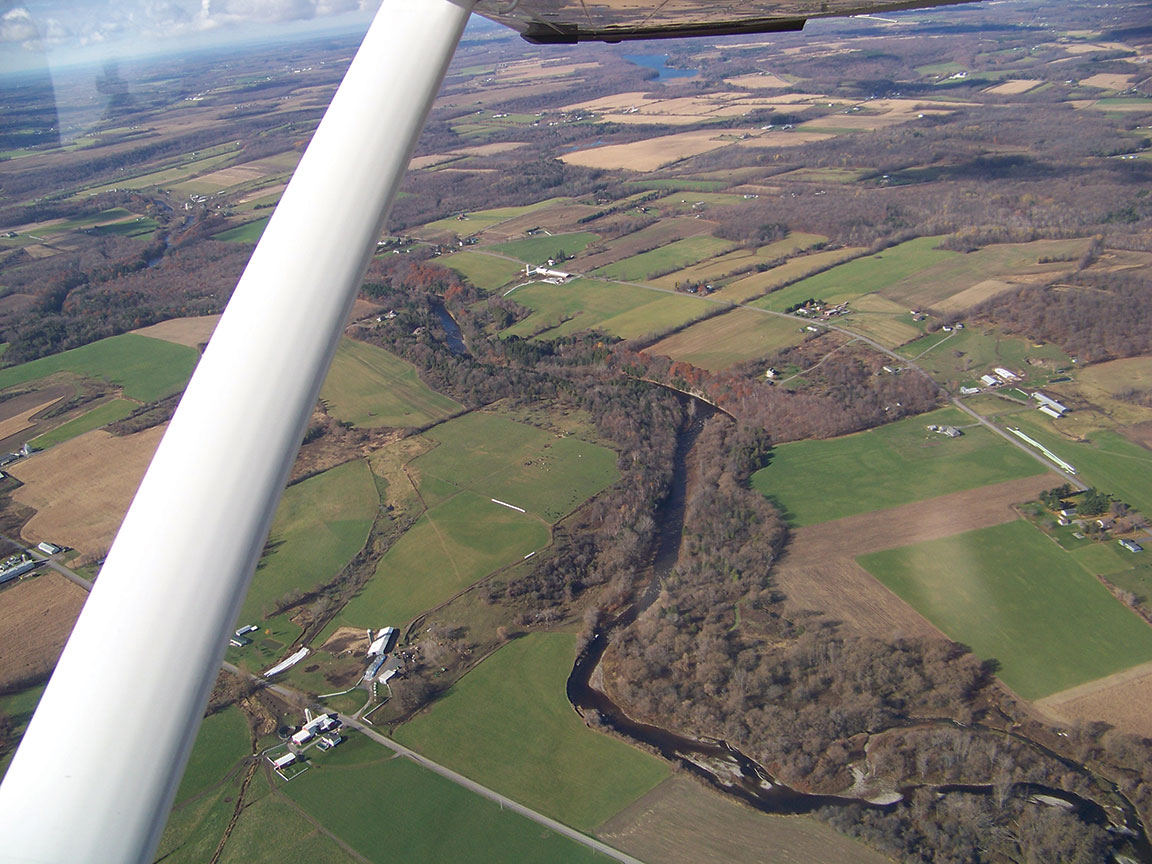
As you can imagine, covering thousands of acres on foot would be an almost impossible task given everything else we need to do—but thanks to an extraordinary volunteer, we are able to observe the conserved lands by air.
Bob Keller is a long-time member of LightHawk, an international program of accomplished pilots who donate their time and their planes to assist conservation organizations.
Bob and his wife Carol have lived in Tug Hill for 25 years to the point where he’ll tell you that the woodlands and sounds of the ducks on his pond are what gets him up every morning. That and flying. Bob loves to fly. And so every year—for the past 10 years—Bob combines his passion for the air and the land by taking the land trust staff to view the landscape from above.
These annual flights take extensive planning to ensure we can locate each of the conserved properties from the air. Bob documents coordinates, juggles maps, ensures our staff avoid getting air-sick (as much as possible), and covers the costs of the gas and the plane ride.
But Bob remains undaunted. Year after year, Bob cheerfully takes on the task of Chief Conservation Pilot despite what can sometimes be a bumpy ride and a lot of work.
Our appreciation for Bob and what he offers local conservation spans thousands of acres, over years of amazing service. Please join us in thanking Bob for what may have been an initial fling but has become an annual ritual. Conservation in the Tug Hill wouldn’t be the same without him.
All over the country, including right here in Tug Hill, monarch butterflies have had it rough. As many as 11 million may have died this past spring due to freak weather and millions of others have perished due to loss of habitat both in this country and Mexico; extreme storms have battered them during their yearly migration.
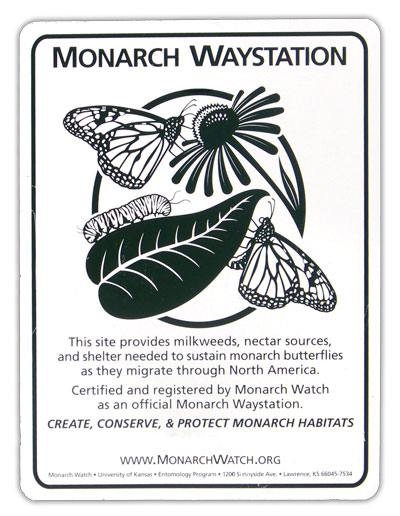
Now considered an imperiled butterfly, the monarch is more than a beautiful flash of orange in the sky; it’s an important pollinator. With its survival in question youth and adults alike are taking action and planting the monarch’s main food source—milkweed—across the country.
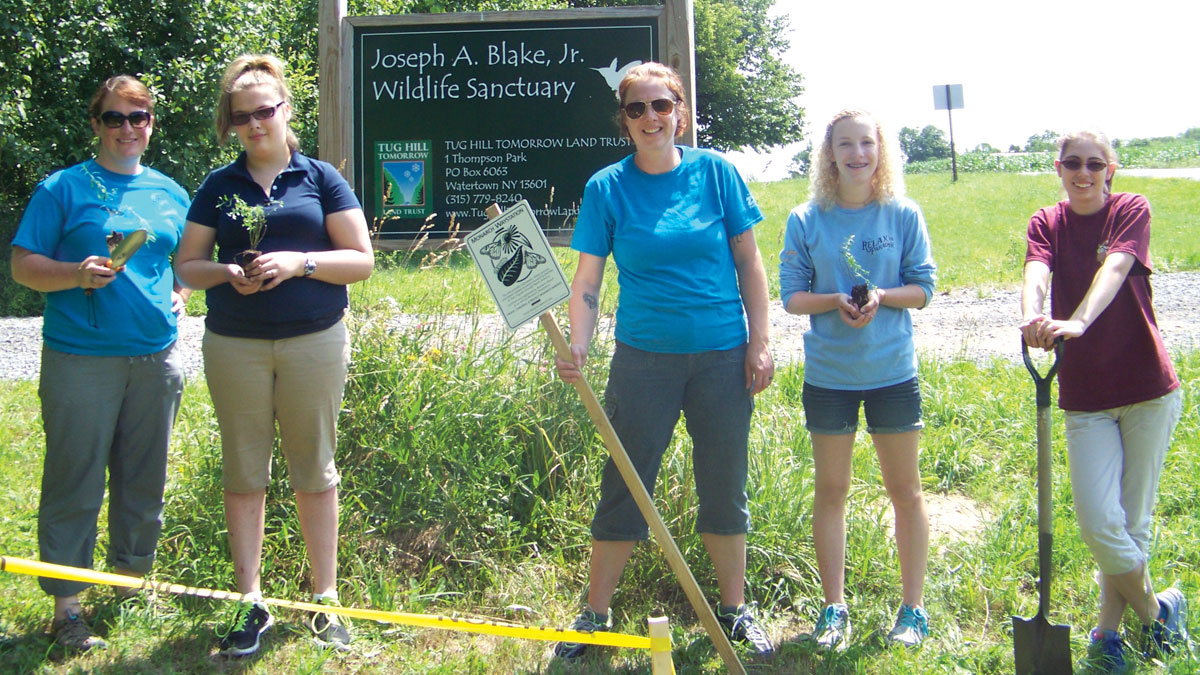
Locally, the Thompson Park Zoo Teens are playing a part in this revival too. The teens are part of an enrichment program held every summer at the zoo to provide opportunities to explore animal and natural sciences.
This summer they took on the challenge of creating new habitat for the monarch at the Joseph A. Blake Wildlife Sanctuary located in Rutland, New York, leaving behind textbooks and memorization to get a taste of what science, land restoration, and wildlife habitat fieldwork might be
like in college.
Their hard work will ensure a new patch of milkweed for next year’s butterflies. For a butterfly that crosses hundreds of miles, and cycles through several generations before returning stateside, an extra patch of milkweed is more than a welcome treat—it can mean survival.
This collective effort, one patch at a time, across the country is starting to show hopeful results. For the first time in a long time, monarch numbers are on the uptick instead of steadily decreasing according to the non-profit Monarch Watch.
Donated to the Tug Hill Tomorrow Land Trust by the North Country Bird Club a number of years ago, the Joseph Blake Wildlife Sanctuary has become a favorite place to hike, spend time with family and friends, learn about birds and wildlife. …and now it provides critical habitat to vulnerable butterflies.
Because so many of us live in, or visit, Tug Hill you might think that folks would be outside every day—hanging out with neighbors and tromping about in the woods and fields—just soaking it all up, right?
Well, not so fast. In our busy lives, and at times crazy weather, people often hunker down and the seasons drift by…and we risk disengaging with the land around us.
It turns out this could be a serious problem if left unchecked. New research published in the journal Ecological Society of America documented that while everyone needs to get outside, it’s super important to connect kids to nature (and farms) if we want to inspire a lasting love of the out-of-doors.
Indeed, it often takes a mentoring adult and regular experiences of fun and emotional commitment to the land.
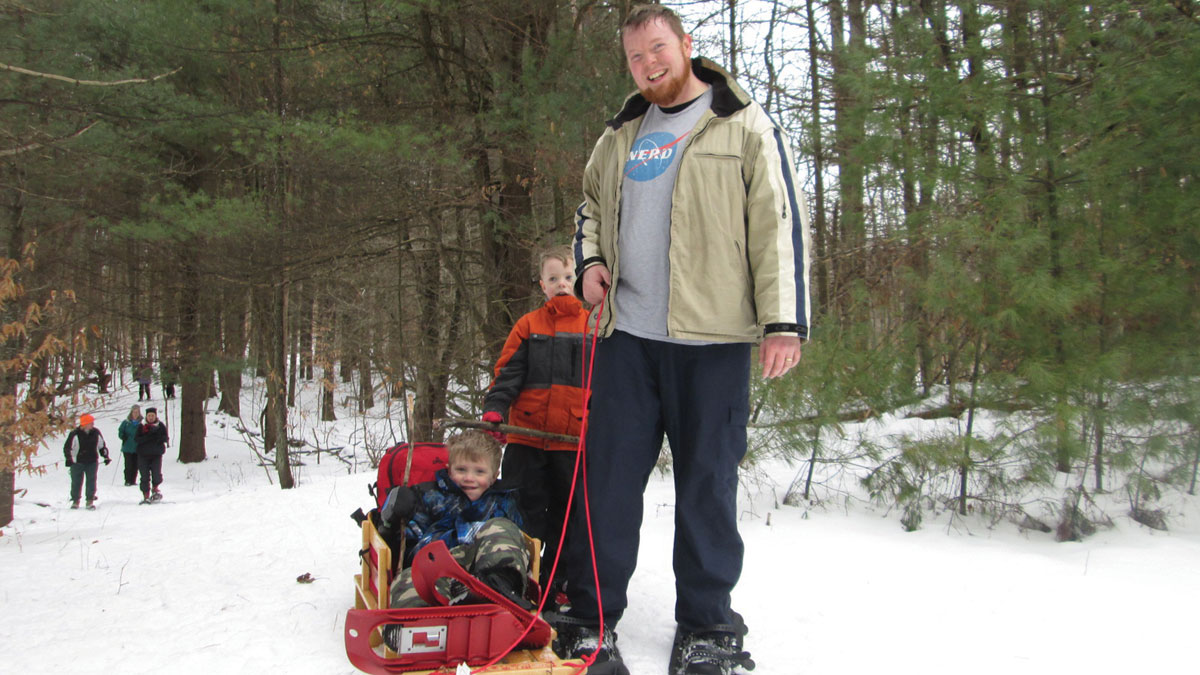
To address this challenge, we will continue to offer a wide variety of family-oriented outdoor programs. These programs are free thanks to the generosity of our members and supporters.
Together, we are providing a strong future for conservation because we know, just like you, that conservation is only as strong as the next generation’s passion.
With more kids than ever spending time behind computer screens and electronic devises, conservation faces an uphill battle. Research, like that from Cornell University, tells us that the majority of people who have a love for the out-of-doors, and a strong conservation ethic, developed it when they were young.
For many, it involved regular, fun, experiences on a farm, or in nature. Richard Louv, author of Last Child in the Woods, documented that for others it was under the guidance of a mentoring adult, often not a parent, who opened up a child’s imagination and built fond and cherished memories of doing something outside.
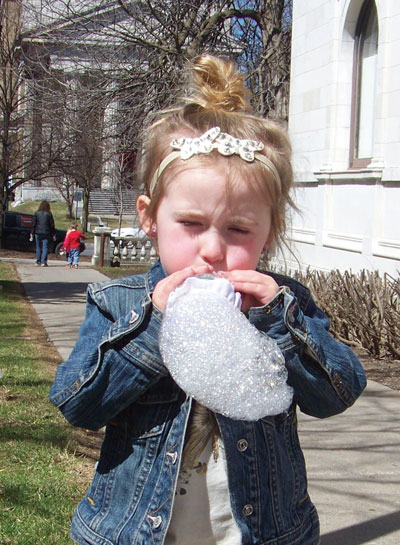
Learning to love nature and create fun things like bubble makers from recycled materials.
Rural kids. Suburban kids. Urban kids.
Perhaps somewhat counter intuitive, kids from all walks of life are frequently less tuned-in, and less-comfortable with, hanging out in the woods or helping to feed a calf.
Your support, however, is working to change that. As a land trust that pledges to honor the protection of conservation into the future, in perpetuity, we realize that the future of conservation rests on future generations. The children of today become the leaders and voters of tomorrow and it is they who will determine how important conservation is in their future community’s lives.
The free programs range from stories and crafts at the Flower Memorial Library in Watertown, the Carthage Free Library and the Lowville Free Library, programs with homeschoolers to explore the woods, and our partnership with the New York State Zoo in Watertown which features animals that are native to New York State. These experiences are working to bring the joy and wonder of the out-of-doors to families and friends, all year round.
Spending time in nature is known to improve people’s health. It’s also just what the doctor ordered when it comes to ensuring a lasting conservation ethic and our pledge of conserving land forever.
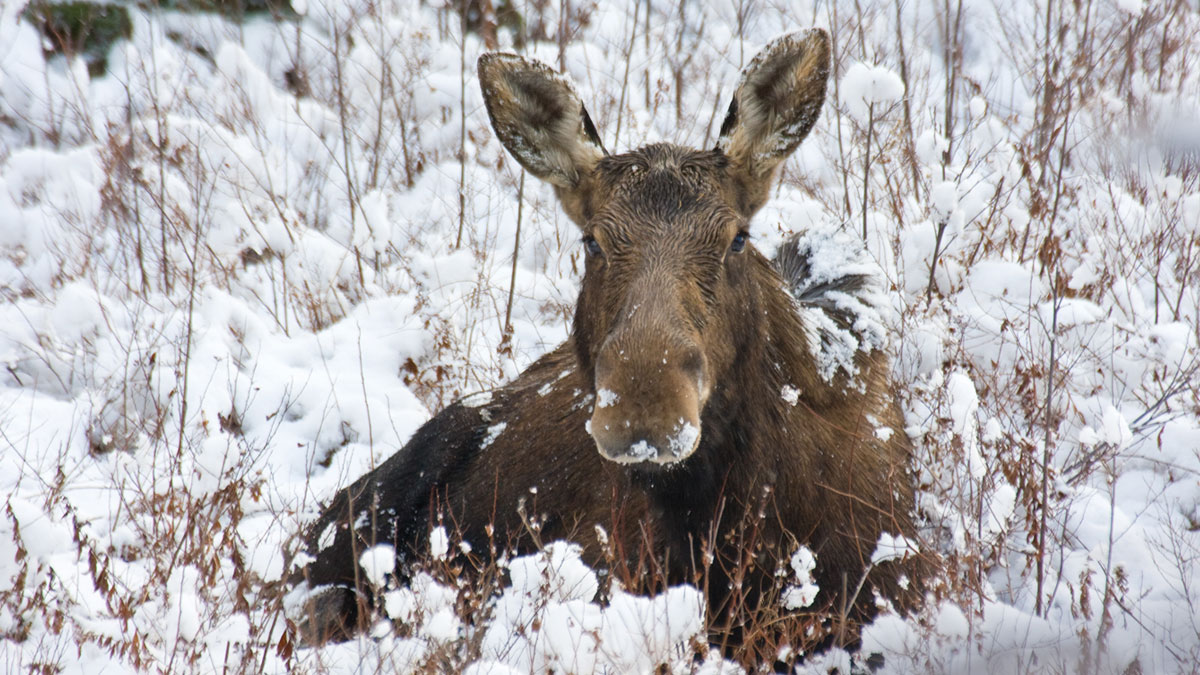
Sometimes it’s just hard to fathom. With all the land around us, here in the Tug Hill and the Adirondacks, how is it that wildlife—like moose, bear, and other large mammals—could find themselves without the habitat they need?
It’s true, there’s a lot of land in our region but the challenge is there are great swaths that are unprotected running a risk of fragmentation from haphazard development, expanding road networks, and stressors caused by climate change resulting in a loss of critical habitat. Large mammals like moose, black bear and Canada lynx need large blocks of forest, together with forested corridors connecting these blocks, to move in search of suitable habitat to sustain them and their young into the future.
Maintaining these connections between large forested areas, like Tug Hill and the Adirondacks, is critical for many wildlife species that require large areas for survival.
To address this, while there is still time and before the animals become too stressed, a partnership called Staying Connected, between local towns, conservation organizations, and state agencies has been working together to identify areas of the Black River Valley that seem optimum for wildlife movement between the two regions. Over the past several years, current knowledge of wildlife needs, computer modeling and on-the-ground data have been used to identify areas of special interest regarding wildlife movement.
Two priority areas have been identified through the work so far, one of which is the mostly forest and farm area in Northern Oneida County. Working with willing landowners, on a voluntary basis, you are helping us, as the local land trust, inform them of actions they can take to make their land more wildlife friendly and in some cases permanently protect these important lands before they are lost.
Thanks to your support, a number of families have protected their land while continuing to own it. They are helping ensure that there will be land and waterways available for large mammals, like the moose, to migrate. It’s a strategic and proactive way to maintain and improve the landscape for wildlife before it’s too late.
Staying Connected Tug Hill Tomorrow Land Trust Partners Adirondack Chapter of the Wildlife Conservation Society, Adirondack Nature Conservancy/Adirondack Land Trust, NYS Department of Transportation, NYS Department of Environmental Conservation, NYS Tug Hill Commission.
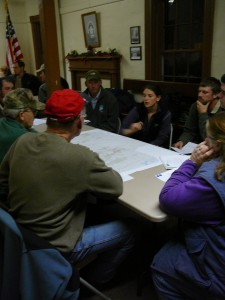
On a snowy December night in 2010, the Staying Connected Initiative led a community visioning exercise with stakeholder groups and local officials representing Ava, Steuben, and Western, three small towns in the Tug Hill – Adirondacks linkage in New York. Despite the bad weather, the small town hall was packed with landowners, snowmobilers, birders, loggers, farmers, hikers, hunters, anglers, ATVers, and local people from all walks of life.
The 25 participants, guided by a Staying Connected facilitator, divided up into small groups, hunched over local maps, and began marking places they cared about and valued most within their communities.
“We asked a single question: ‘What do you love about living in your town?’ And in doing so, we made it very transparent that we were including all perspectives and that everyone’s view was equally valid,” remembers Leslie Karasin, Program Manger for the Adirondack Program of the Wildlife Conservation Society. “We weren’t trying to set priorities, discuss the merits of wildlife connectivity, or do land use planning. We merely wanted to document the places that people love in their towns, and find out why they care about them.”
The townspeople quickly warmed to the process: “Some said, ‘I love the quiet or wildlife sightings here, or I love to ski, hunt, or fish there.’ Others said, ‘I really love the economic opportunities provided here, or the community feel of the downtown.’ We got a huge range of responses,” recalls Jens Hilke, the Vermont Fish and Wildlife Department biologist who facilitated the meeting.
The exercise conducted that winter night is formally known as Community Values Mapping, an innovative new conservation technique being implemented by Staying Connected. “It’s a way to create conversations in communities around the shared values that exist between people,” rather than focusing on what divides them, says Karasin. “For me it was exciting to apply the tool and see its potential for finding common ground between diverse interest groups.”
The groundwork for this particular Community Values Mapping session had been laid more than a year earlier. In 2009, the Staying Connected Initiative had modeled and mapped the wildlife linkages connecting New York’s Tug Hill, a 2,100 square mile upland of largely unbroken northern hardwood forest, and the Adirondack Mountains, with its 2.3 million acre Forest Preserve.
The most endangered linkage they discovered was a roughly 20-mile-long wildlife corridor that crossed the Black River Valley and included the tiny New York towns of Ava, Western, Steuben, Boonville, Forestport and Remsen.
“We noticed right away that those towns had a lot in common,” says Tug Hill Commission Associate Director of Natural Resources Katie Malinowski. “They’re all in northern Oneida County. They share valley topography, many of the same sorts of development pressures, are mostly rural, historically with lots of agricultural land. The local people typically shop in the same places, often know each other, and have similar attitudes,” including suspicions concerning outside conservation efforts and worries about inappropriate development altering the rural character of their towns.
A group of five Staying Connected partners – the Wildlife Conservation Society, The Nature Conservancy, Tug Hill Tomorrow Land Trust, Tug Hill Commission, and Northern Oneida County Council of Governments – went to work to implement the Initiative’s three-pronged strategy for maintaining linkages, which includes land protection, local land use planning, and technical assistance to local organizations.
Community Values Mapping was chosen as a key first step for engaging local towns, with one session planned for Ava, Steuben and Western in 2010, and a second planned for Boonville, Forestport and Remsen late in 2012.
The Community Values Mapping process began well before the actual meetings. “A vast majority of the work is in outreach done ahead of time by our local partners to insure all the constituencies are well represented on the night of the mapping activity,” says Hilke. “In our case we worked with the Tug Hill Commission and the circuit riders of the Northern Oneida County Council of Governments. They combed the communities, inviting a diverse cross-section of town residents to the events.”
Geraldine Ritter, a circuit rider very familiar with the residents of Ava, Western, and Steuben, was very happy with the resulting Community Values Mapping session. Despite the diverse views represented, participants “were surprised that all of the small groups came up with roughly the same information on their maps,” she recalls. “People agreed that the interactive exercise was very useful. One big plus was that they got to know people they didn’t know from other towns, and to understand what was important to adjoining communities.” The process also helped residents realize the value of what they have in their communities. Many agreed that Staying Connected might offer good tools for developing conservation guidelines in the future.
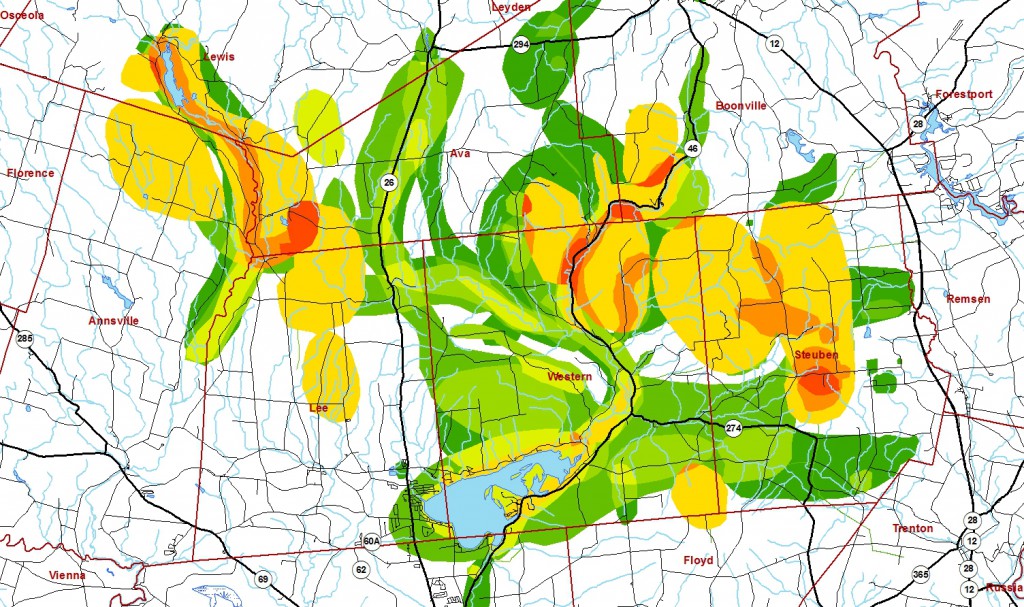
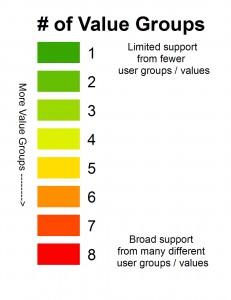
After the Ava, Steuben and Western meeting, Staying Connected merged all the data collected into a single document, mapping all the values that had been noted by attendees.
“The town of Ava soon incorporated the map into their comprehensive plan, along with statements referencing the importance of wildlife corridors,” reports Malinowski. That language includes ways to preserve habitat through site plan and subdivision review, and recommends minimum maintenance road designations to help protect wildlife. “Looking ahead, if the town implements zoning based on their comprehensive plan, then we can get very specific about recommending connectivity options,” Malinowski says.
The towns of Western and Steuben are still working on their comprehensive plans, though one of them has used the Community Values Mapping data to help officials focus on what’s important in their towns concerning the passage of land use updates. The results of the 2012 Community Values Mapping session in Boonville, Forestport and Remsen have yet to unfold. The town of Trenton, at the edge of the linkage, has also adopted connectivity language into its comprehensive plan.
Community Values Mapping is very useful in creating a baseline for land use planning. “Figuring out where a community wants to go in the future depends a lot on what community members value right now,” Hilke says. “The Community Values Mapping activity is an excellent way of bringing people into, and involving them early, in conservation planning.” It also shows Staying Connected where community consensus already exists regarding valued natural places, and where those areas overlap with ecologically important areas for habitat connectivity, an indication of potential community buy-in for conservation.
Community Values Mapping is just one of many Staying Connected efforts underway in the Tug Hill – Adirondacks linkage. The partners have developed a series of technical handbooks for planners called, “Make Room for Wildlife,” a printed resource that lays out options for appropriate development while minimizing wildlife impacts. The handbook has been presented to dozens of communities and landowners in the region.
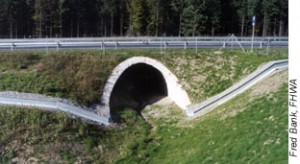
In addition, the partners have joined with the N.Y. Department of Transportation (NYDOT) and two local highway departments to identify potential mitigation projects to enhance wildlife movement across roads. “Road kill is to no one’s advantage, not for the state, towns or wildlife,” notes Geraldine Ritter who has ridden with highway superintendents in an attempt to locate wildlife crossing hotspots. “Staying Connected has used its models to help towns pinpoint where animals are crossing, and is taking action to recommend signage, fencing, or underpass modifications for animal use.”
The partners are currently awaiting NYDOT engineer approval of a “critter walk,” a wildlife shelf added to a key culvert on Route 12/22 – a major road barrier to animal movement in the Black River Valley. Elsewhere, The Nature Conservancy has secured funding to up-size an important culvert to enhance Tug Hill – Adirondacks connectivity.
A citizen science tracking program is also underway in this linkage. WildPaths uses local volunteers to generate data on 30 miles of priority roadways in the Black River Valley to inform local land use and transportation decisions. WCS’ Adirondack Program Director, Zoё Smith, describes the benefits of WildPaths. “Using citizen scientists allows us to collect important data as well as build shared knowledge and interest in the landscape used by both people and wildlife”.
Targeted land conservation efforts have also proven successful. ”We’ve primarily been working with donated conservation easements through the Tug Hill Tomorrow Land Trust,” says Dirk Bryant, Director of Conservation Programs for the Adirondack Chapter of The Nature Conservancy. “The goal, as in other linkages, is to protect significant habitat stepping stones. We’ve been focusing on a five-mile stretch of the Black River Valley where there is a lot of potential for second home development. Today, most of that area is largely forested, so there is a real opportunity to prevent the valley from becoming a barrier to wildlife.” Over the last three years the Staying Connected partners have protected more than 1,000 acres in the Tug Hill – Adirondacks linkage.
“One of the best, most unexpected, things to come out of Staying Connected is that we’ve formed excellent relationships with the other partners,” says Tug Hill Tomorrow Land Trust Executive Director Linda Garrett. “We didn’t have an opportunity to work with some of these groups before, and it’s definitely a positive. Now that we’ve got the momentum going, we hope to work with the linkage communities to raise awareness even further.” Garrett is especially hoping to develop a Staying Connected curriculum for local children at an environmental center in Boonville. “Getting the word out to kids is always a good way to build awareness for the future,” she says. “We’re doing everything we can to move Staying Connected forward in our communities. Maintaining wildlife connectivity makes sense to local people and we want to see the Initiative continue.”
“Community Values Mapping is a key first step in working with local communities, because the Staying Connected partners send a clear message: We care about what you think,” concludes Hilke. “Staying Connected isn’t just about connecting wildlife. It is about connecting people. Linking people to each other, to the landscape, and to wildlife.


 Now considered an imperiled butterfly, the monarch is more than a beautiful flash of orange in the sky; it’s an important pollinator. With its survival in question youth and adults alike are taking action and planting the monarch’s main food source—milkweed—across the country.