Expanding Outdoor Adventures

Thanks to the generous support of the Sawyer Fund and the Northern New York Community Foundation, Tug Hill explorers at the Boonville, Constableville and Western Town libraries will soon have even more opportunities to discover nature right in their own backyard.

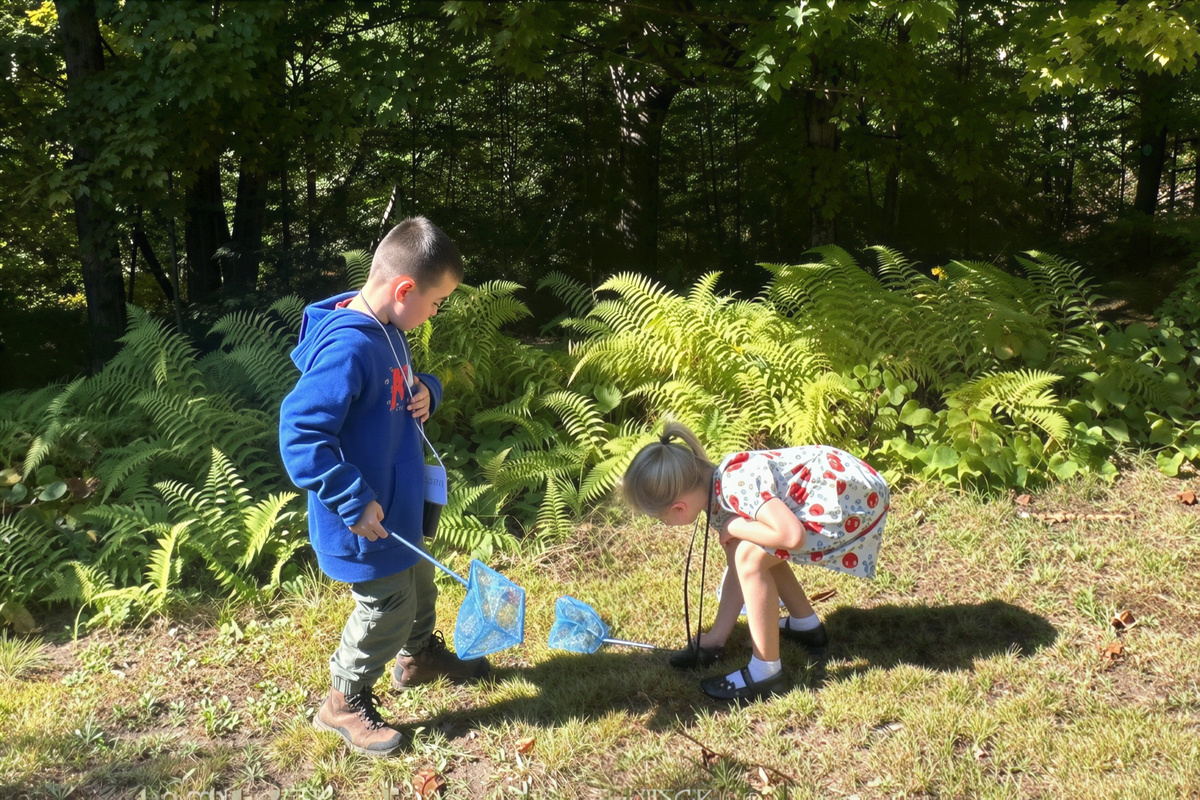
In the coming weeks, each library will receive two new Tug Hill Explorer Backpacks—an Insects Backpack and a Ponds & Streams Backpack—to add to the Birding and Tracking Backpacks they already have. Together, these hands-on resources will give children, families, and nature enthusiasts the tools and guidance they need to explore the wildlife and habitats found throughout the Tug Hill region.

From searching for insects and learning about their important role in local ecosystems to exploring the importance of ponds and streams, the backpacks make outdoor learning accessible, educational, and fun. Families can borrow the backpacks just like a library book and head outside to explore on their own time and at their own pace.

By providing the tools and resources needed to explore close to home, the Tug Hill Explorer Backpack Program helps remove barriers to outdoor learning and encourages curiosity, exploration, and a deeper appreciation for nature. These experiences can help foster a lifelong appreciation for Tug Hill’s wildlife and habitats while inspiring stewardship and outdoor learning for all ages.

Tug Hill Tomorrow Land Trust is grateful to the Sawyer Fund and the Northern New York Community Foundation for supporting outdoor education and helping create more opportunities for local families to explore, learn, and connect with nature.

If you or your business would like to sponsor a backpack for a local library, or if your library would like to request a program, please contact us at 315-779-8240.

Libraries participating include

Jefferson County: Adams, Adams Center, Black River, Carthage, Dexter, Ellisburg, Rodman and Watertown

Oswego County: Central Square, Mexico,  Orwell, Parish, Pulaski, Sandy Creek and Williamstown

Lewis County: Constableville, Lowville, Lyons Falls, Martinsburg, Osceola, Port Leyden, West Leyden

Oneida & Herkimer Counties: Barneveld, Boonville, Camden, Holland Patent, Poland, Prospect, Remsen, Rome, Turin, Western Town, Woodgate

A Day Outdoors Celebrating Conservation

A beautiful, sunny day at the Trenton Greenbelt brought together Tug Hill Tomorrow Land Trust supporters, families and friends for the 2026 Tug Hill Community Picnic on Saturday, September 12th.

With warm temperatures, blue skies, and plenty of sunshine, guests gathered to celebrate the places and people that make conservation possible. Guided walks offered a chance to explore the Greenbelt and learn more about its history, while families and friends took part in activities, shared conversation, and made the most of the beautiful day outdoors.

Following lunch, Executive Director Heidi Sourwine welcomed the crowd and shared updates on the Land Trust’s work and the exciting year ahead. The picnic also provided an opportunity to recognize two individuals whose dedication has made a meaningful difference in the Tug Hill community.

  • Peggy O’Shea received the Top of the Hill Award, recognizing her outstanding commitment, leadership, and continued support of Tug Hill Tomorrow Land Trust and its conservation mission.
  • Beth Maguire received the Above & Beyond Award, honoring the extraordinary time, energy, and enthusiasm she has given to support the Land Trust and its work.

Dr. Colin Beier, Professor in the Department of Sustainable Resources Management at SUNY ESF, was this year’s featured speaker. He shared insights into the many ways forests can be stewarded and managed, encouraging attendees to think about the different approaches landowners and communities can take to care for forests and support their long-term health.

The day was filled with laughter, conversation and plenty of opportunities to slow down and appreciate the outdoors. Thank you to everyone who joined us, volunteered, and continues to support Tug Hill Tomorrow Land Trust. We’re grateful for this community and look forward to gathering again next year.

From Coloring to Conservation

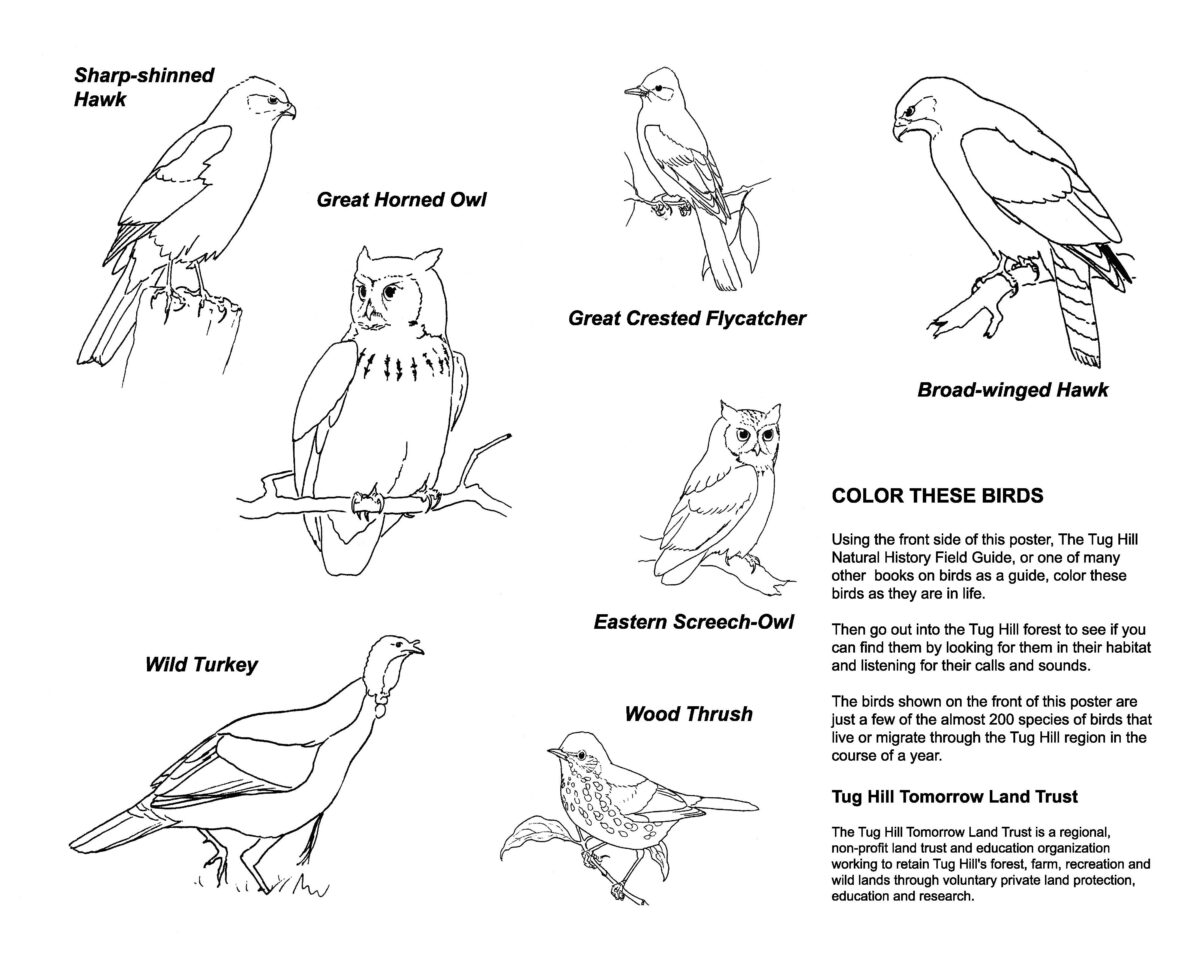
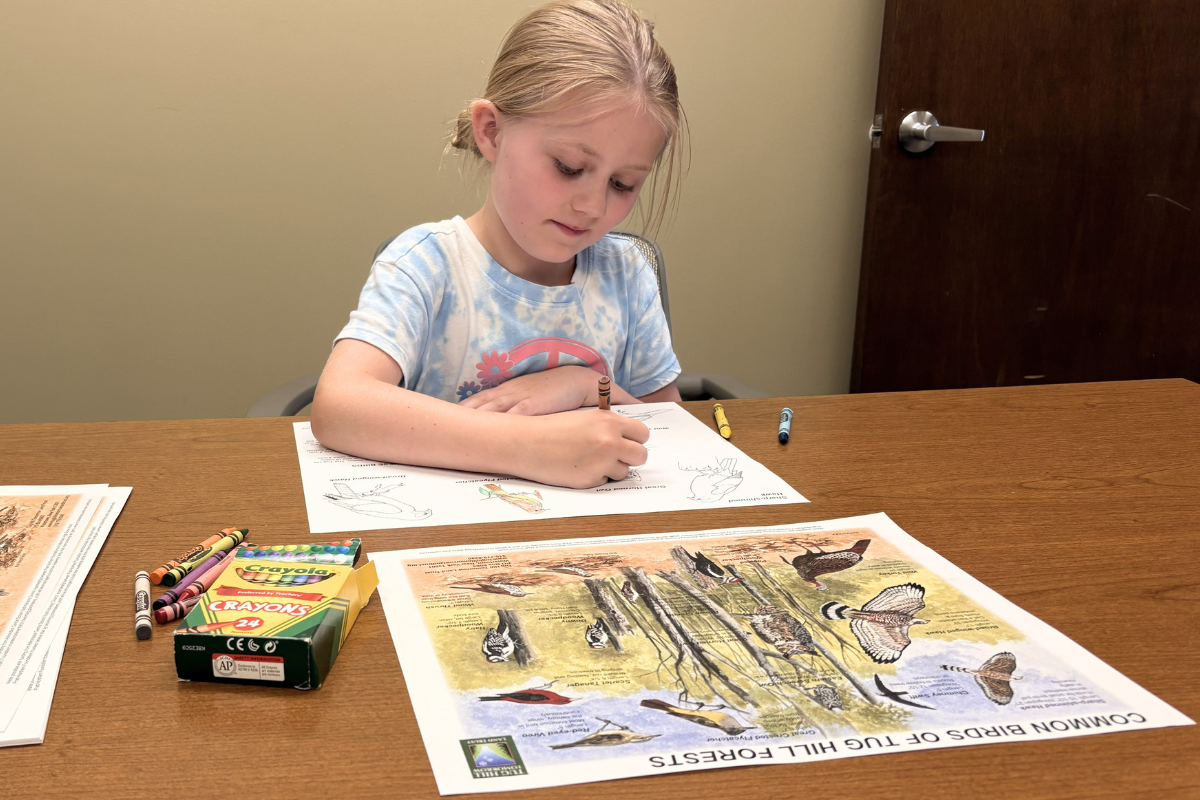
young girl coloring a tug hill bird placemat

As a new school year begins, classrooms are once again filled with curious students ready to learn. While many lessons begin inside the classroom, some of the most meaningful learning can continue outdoors, helping children discover the lands and wildlife right in their own backyard.

Connecting young people with nature at an early age can spark curiosity, encourage observation, and foster a lasting appreciation for the outdoors. When children learn to recognize a bird by sight or sound, a familiar walk can become an opportunity to discover something new.

At Tug Hill Tomorrow Land Trust, we love seeing educators find creative ways to help students make those connections. Sister Bethany is one example of an educator finding simple, meaningful ways to introduce her students to local wildlife.

Sister Bethany uses our Common Birds of Tug Hill Forests placemats as part of the Pope Leo Green Apple Recognition Project, which recognizes young people for the ways they are caring for God’s creation. Students receive a certificate and a small token of appreciation, with the bird placemats offering another way to celebrate their efforts.

For Sister Bethany, the placemats are more than a prize. They help students become more aware of the beauty around them while giving them an opportunity to express themselves through coloring and exploration.

The placemats feature colorful illustrations, names, and descriptions of local birds, including the Great Horned Owl, Wild Turkey, and Broad-winged Hawk. The reverse side invites students to use a field guide or bird book to color the birds as they appear in real life.

Then the lesson can move outside: Can you find them?

Students can look for birds in their habitats and listen for their calls and sounds. A simple activity encourages them to slow down, look closely, and notice the wildlife around them.

And there is plenty to discover. The birds featured on the placemat represent just a few of the nearly 200 species that live in or migrate through the Tug Hill region throughout the year.

For Sister Bethany, these activities are also a way to encourage gratitude and care for God’s creation.

“We take care of what we love, so the more we know about it, the more we are inspired to take care of it.”

She hopes that helping students learn about the beauty around them will inspire them to appreciate and care for the land and wildlife they encounter.

Are you finding creative ways to bring nature into your classroom or youth program? We’d love to hear about it! Tug Hill Tomorrow Land Trust is happy to connect with educators and share ideas and resources that can help young people explore nature. Contact us at 315-779-8240 to start a conversation.

A Path Shaped by Nature

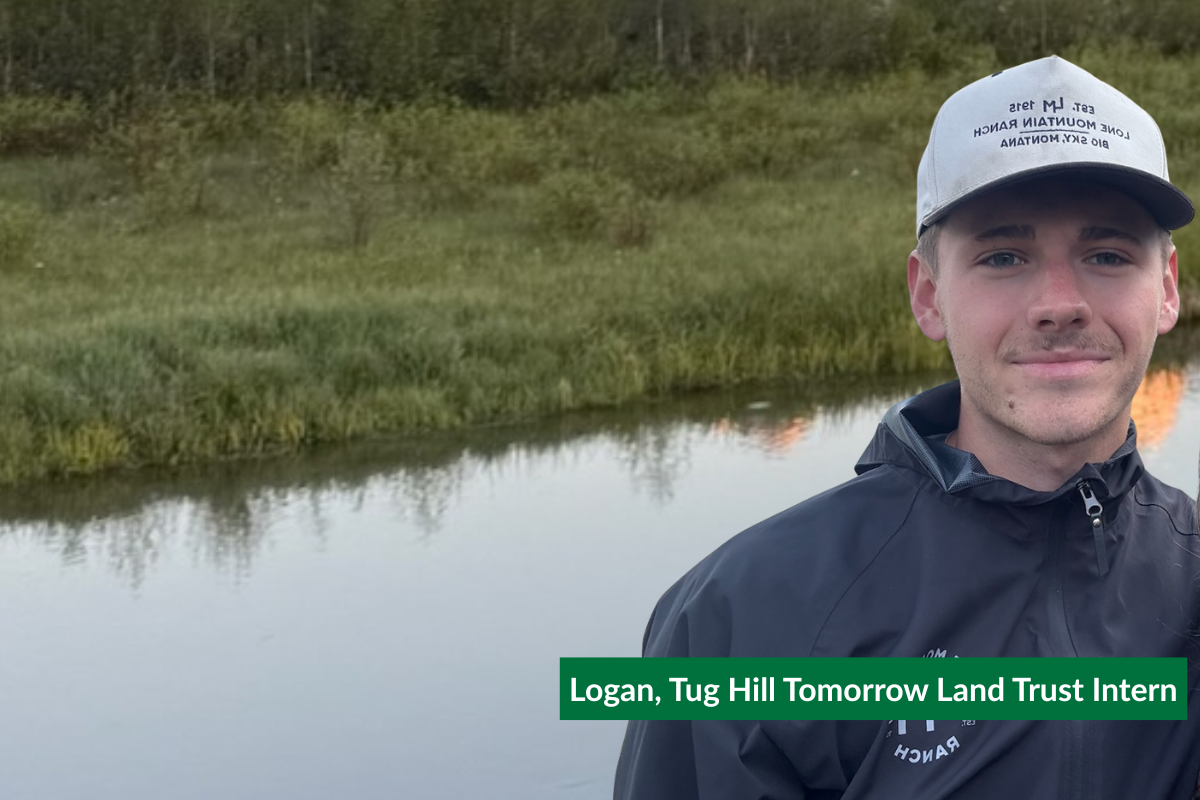
Logan’s connection to conservation began with a lifelong love of the outdoors. Growing up in the North Country, many of his favorite memories involve time spent on the Indian River lakes, the St. Lawrence River, and in the Adirondacks with the people he loves.

“There is something about being outdoors that brings out the whimsy in people,” Logan says. “I realized that I am happiest and most fulfilled while out in nature, so why not pursue a career that allows me to do that every day?”

That passion led Logan to pursue a degree in Environmental Science with a focus in Biology at St. Lawrence University. Through his studies, he has developed a deeper understanding of the natural systems he has always cared about and the importance of protecting them. His coursework, along with hands-on experiences like his internship with Tug Hill Tomorrow Land Trust, has helped shape his interest in pursuing a career in conservation.

When he began his internship, Logan had only a basic understanding of what a land trust did. His experience has given him a much deeper appreciation for the work and dedication that goes into protecting land for the long term.

“While all environmentalists believe that land protection is vital to conservation, I think that very few environmentalists truly understand just how much paperwork, monitoring, and upkeep it takes to run a land trust,” Logan says.

Through his time with the Land Trust, Logan has seen firsthand how many pieces come together to protect land. From observing the creation and maintenance of conservation easements to learning about the ongoing monitoring and stewardship that follows, he has gained a new perspective on what conservation looks like in practice.

“Oftentimes in conservation you see the success stories celebrated, but you never see the massive amount of work and dedication it takes to achieve those successes,” he says. “This opportunity has shown how rewarding land protection can be.”

For Logan, that work is about more than protecting acres. It is about ensuring that forests, farms, wetlands, and other natural places remain part of our communities and available for future generations.

His own experiences in nature have shown him how important those places can be. “In times of mental and emotional struggle throughout my life, being in nature has never failed to humble me and put everything into perspective,” he says. “The lack of distraction allows for thoughts to flow more organically and gives me the space to think about my life from a wider perspective.”

As rural areas face increasing pressure from development, Logan believes the work of land trusts is more important than ever.

“The work of a land trust is some of the most important within the space of conservation because it means that the land being protected can never be changed or developed again,” he says.

His time with Tug Hill Tomorrow Land Trust has reinforced his desire to pursue a career in conservation and given him a greater appreciation for the people and long-term commitment behind protecting the places we love.

Wildlife Through the Lens

What happens on our nature preserves when no one is around? Thanks to two Snapshot NY trail cameras, we’re getting a closer look at the wildlife that calls Tug Hill home, one photo at a time.

This year, Tug Hill Tomorrow Land Trust joined Snapshot NY, a statewide community science project led by Cornell University and the New York State Department of Environmental Conservation. Using motion-activated trail cameras, volunteers and partners across New York are helping researchers better understand where wildlife lives, how populations change over time, and how conservation efforts can best protect them.

Our two cameras are located at the Dimon & Rhoda Benson Public Conservation Area and the French Settlement Road Public Conservation Area. While both locations have contributed valuable information, the camera at French Settlement Road has been especially active.

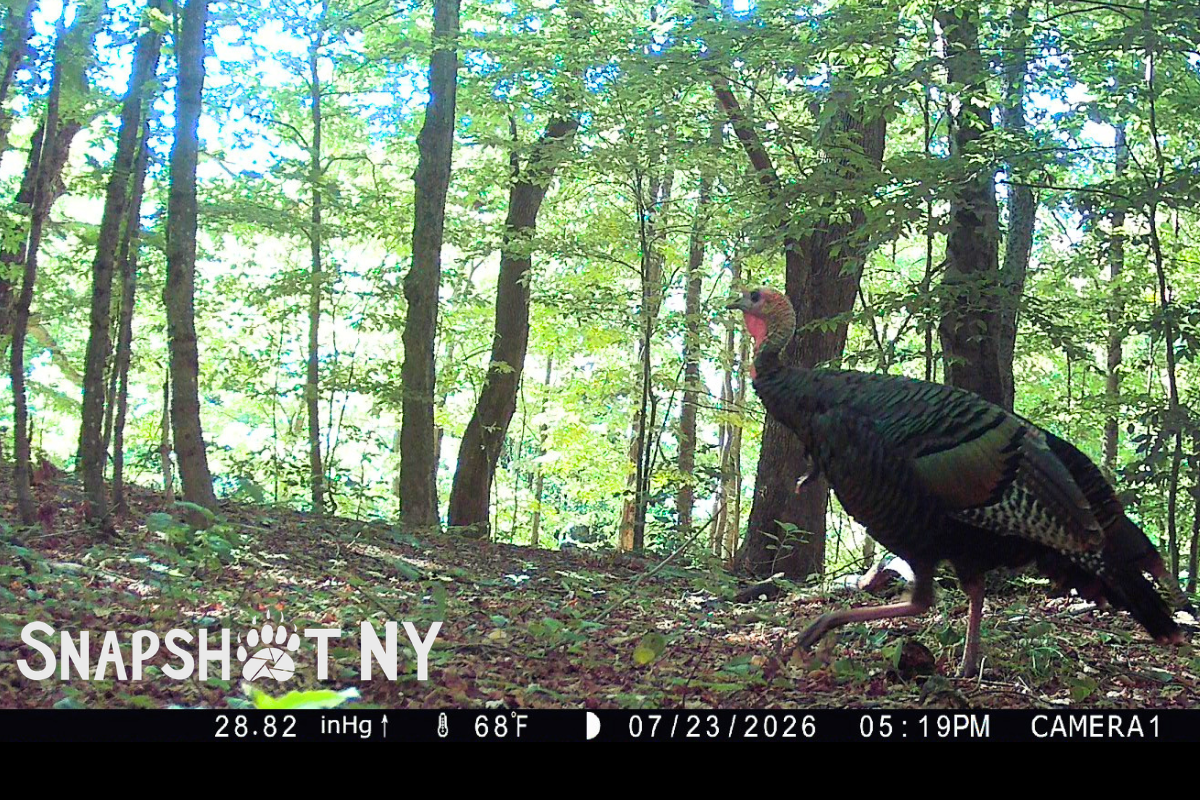
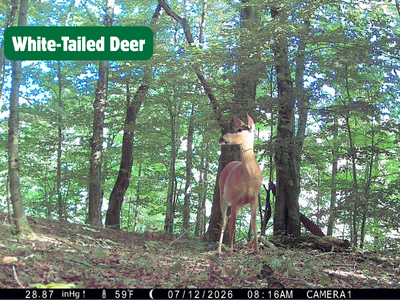
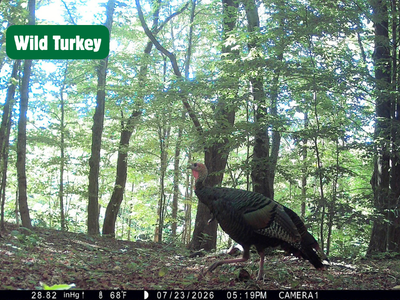
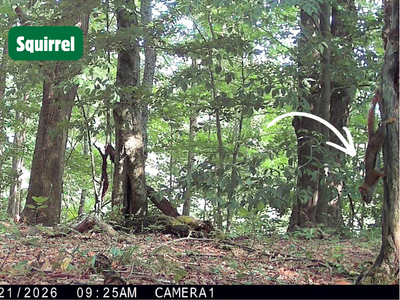
French Settlement Road’s mix of mature forest, wetlands, and beaver ponds creates ideal habitat for a wide variety of wildlife. Since installing the camera, we’ve captured white-tailed deer traveling through the woods, wild turkeys foraging along the forest floor, squirrels darting down the trees, raccoons making their rounds, and even a watchful owl taking flight after dark. These candid moments offer a unique look at the wildlife that thrives in this protected landscape, often unnoticed by visitors.

Each photograph collected is more than just an interesting wildlife encounter, it becomes part of a statewide database that helps scientists better understand New York’s mammals and birds. By comparing images from hundreds of cameras across the state, researchers can track changes in wildlife populations, monitor species distributions, and better understand how habitats are being used over time.

Here on Tug Hill, this information is especially valuable. The region’s expansive forests, wetlands, and connected habitats support an incredible diversity of wildlife. Protecting these landscapes not only provides places for people to explore and enjoy nature, but also ensures that native wildlife has the habitat it needs to survive and flourish. Participating in Snapshot NY allows our conserved lands to contribute to wildlife research that benefits conservation efforts across New York.

Would you like to be part of the project? Snapshot NY welcomes volunteers from across the state. Volunteers help maintain trail cameras, upload photographs, and identify wildlife species captured in the images. Whether you’re an experienced naturalist or simply enjoy spending time outdoors, there’s a place for you in this community effort.

To learn more or sign up to volunteer, visit www.snapshotny.org/get-involved.


Who’s Been Caught on Camera at French Settlement Road Public Conservation Area?

Here are just a few of the wildlife animals our Snapshot NY camera has captured.

Deer in forest
Turkey in a forest

Create Your Own Conservation Legacy

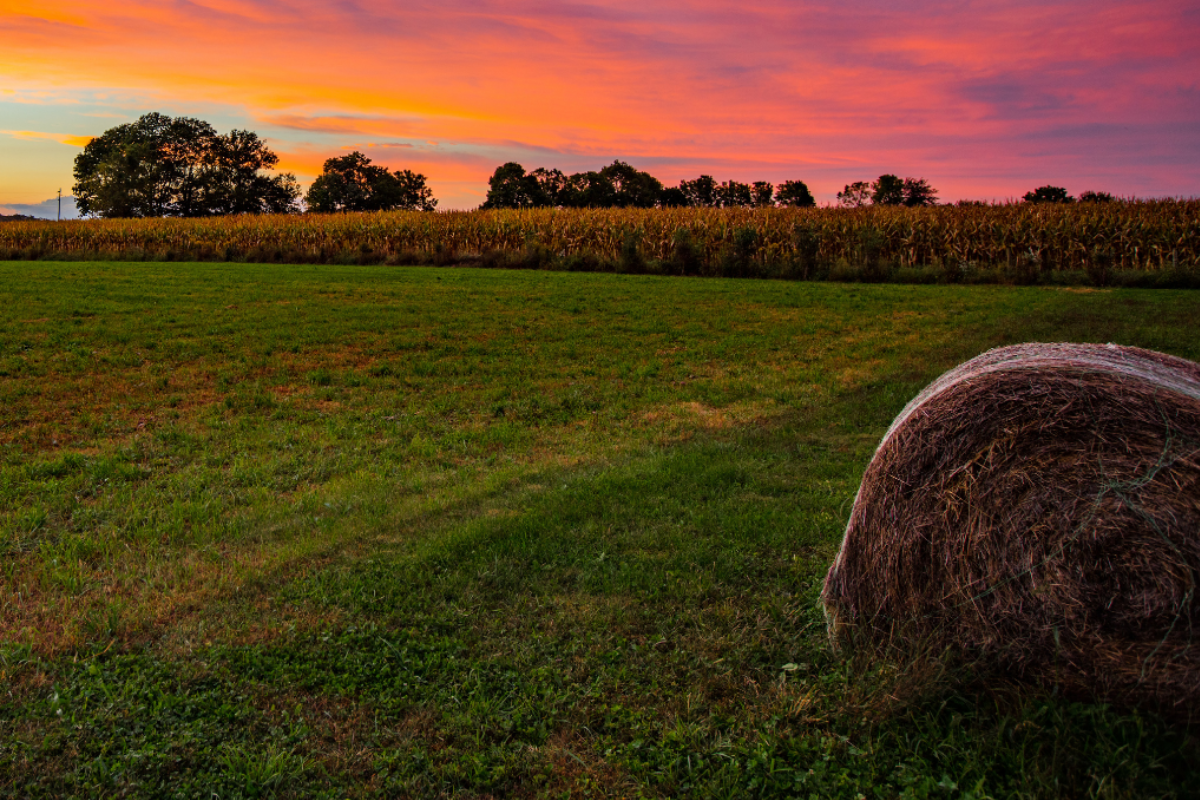
Sunset on a farm

Create Your Own Conservation Legacy During National Make-A-Will Month

August is National Make-A-Will Month, a time to think about the future and the legacy you want to leave behind. Creating or updating your will is one of the most meaningful ways to ensure your wishes are honored, your loved ones are cared for, and the places you cherish continue to thrive.

For those who love the forests, farms, wildlife, and trails of the Tug Hill region, including Tug Hill Tomorrow Land Trust in your estate plans is a simple way to help protect these special places for generations to come. Planned gifts can be made through your will, retirement account, or life insurance policy, allowing your commitment to conservation to extend far into the future.

Why Having a Will Matters

A will is about more than passing along assets. It provides peace of mind by ensuring your wishes are carried out and helping make things easier for those you care about. If it’s been several years since you last reviewed your estate plans, National Make-A-Will Month is the perfect reminder to revisit them and consider the legacy you’d like to create.

Double Your Impact with the Legacy Challenge

There’s never been a better time to make your plans.

Thanks to the generosity of longtime supporters Bob and Carol Keller, every new planned gift commitment made through the end of 2026 will unlock an additional $1,000 gift to Tug Hill Tomorrow Land Trust through the Legacy Challenge, up to $10,000 in matching support. This means your commitment to conservation can make an even greater impact today while ensuring the Tug Hill region remains protected for tomorrow.

Start the Conversation

Whether you’re creating your first will or updating an existing one, now is an excellent time to take that important step. If you’re interested in including Tug Hill Tomorrow Land Trust in your estate plans or simply want to learn more about your options, we’re here to help. We’d be happy to answer your questions and provide information about planned giving opportunities.

Together, we can protect the Tug Hill region for generations to come.


Opening the Door to Discovery

Thanks to the generosity of the Klindt Family, young explorers visiting Dexter Free Library now have even more opportunities to discover the outdoors through hands-on learning and adventure.

The Klindt Family recently sponsored a Tug Hill Explorer Birding Backpack and Tracking Backpack for the library, providing children and families with free access to tools and resources that help them connect with nature. Each backpack is filled with books, field guides, and interactive equipment designed to encourage exploration of the wildlife and natural habitats found throughout the Tug Hill region.

Whether identifying birds by sight and sound, searching for animal tracks, or learning about local ecosystems, these backpacks make outdoor discovery accessible, educational, and fun for all ages. Families can borrow the backpacks just like a library book and explore at their own pace in local parks, trails, backyards, and other outdoor spaces.

For Sandy Young Klindt, the goal is simple: inspire curiosity and a love of nature in the next generation.

“If one child uses the backpack and discovers this is something they like, then it is a success” said Klindt.

The Tug Hill Explorer Backpack Program helps remove barriers to outdoor learning by providing families with the resources they need to explore nature close to home without having to purchase their own supplies and tools. By fostering curiosity, observation, and hands-on experiences, the program encourages a deeper appreciation for wildlife and the landscapes that make the Tug Hill region unique.

Tug Hill Tomorrow Land Trust is grateful to the Klindt Family for supporting outdoor education and helping create opportunities for local children and families to experience the wonders of nature right in their own backyard.

If you or your business would like to sponsor a backpack for a local library, or if your library would like to request a program, please contact us at 315-779-8240.

Libraries participating include

Jefferson County: Adams, Adams Center, Black River,Carthage, Dexter, Ellisburg, Rodman and Watertown

Oswego County: Central Square, Mexico,  Orwell, Parish, Pulaski, Sandy Creek and Williamstown

Lewis County: Constableville, Lowville, Lyons Falls, Martinsburg, Osceola, Port Leyden, West Leyden

Oneida & Herkimer Counties: Barneveld, Boonville, Camden, Holland Patent, Poland, Prospect, Remsen, Rome, Turin, Westernville, Woodgate

A Season of Stewardship

This season, our partners at SLELO PRISM are offering a wide range of opportunities for everyone to get involved in protecting the region’s lands and waters. From virtual learning sessions to field-based conservation work, these programs are designed to build practical skills while fostering a deeper connection to local ecosystems.

The Land and Water Protectors programs begin in early June with public kickoff webinars, followed by a series of field sessions throughout the summer and into the fall. Participants will have the opportunity to learn how to survey for forest pests, identify and manage terrestrial invasive plants, and apply stewardship practices in real-world settings. These sessions are open to all experience levels and provide a meaningful entry point into hands-on conservation work.

Additional programming includes the Aquatic Invasive Species Learning Experience (AISLE), which combines webinar learning, workshops, and on-the-water paddles to help participants better understand and respond to aquatic invasive species across the region. Community members are also invited to take part in the Lakeview WMA Bioblitz, where volunteers will document local biodiversity using the iNaturalist app in a collaborative, field-based event designed for all ages and experience levels.

The season continues with a series of Water Chestnut Pulls throughout the summer, offering volunteers a chance to directly support aquatic habitat restoration efforts. These events bring partners together on the water to help remove invasive plants and improve conditions for native species.

From guided learning to hands-on restoration, each of these opportunities offers a chance to get involved, learn something new, and contribute to the long-term health of the region’s lands and waters.

For a full list of events and registration details, participants are encouraged to explore SLELO PRISM’s event listings and sign up to join in the work ahead: www.sleloinvasives.org/events

Tug Hill Photo Contest Now Closed

The Annual Tug Hill Tomorrow Land Trust Calendar Photo Contest has officially come to a close. Thank you to all of the talented photographers who shared their work with us and helped capture the beauty, character, and spirit of the Tug Hill region.

Each submission offered a unique perspective from sweeping seasonal landscapes to quiet moments in nature and we are incredibly grateful for the time, creativity, and care that went into every photo. Your contributions make it possible for us to tell the story of Tug Hill in a meaningful and inspiring way.

We would also like to extend our sincere thanks to the sponsors who are making the production of the 2027 calendar possible:
Coughlin
Bob & Carol Keller
GYMO
The Enchanted Edible Forest at Cross Island Farms
RBC Wealth Management
Their support brings the calendar to life and allows even more people to experience the beauty of Tug Hill.

If you are interested in joining this group of sponsors, please reach out to Emily Males at [email protected] for more information.

Thank you again to everyone who participated. We can’t wait to share the final calendar with you.

Exploring the Path to Conservation

Rachel Rosner’s path to conservation didn’t begin in a classroom it began outdoors, exploring the woods, waterways, and winter landscapes of New York’s North Country.

Childhood winters in the North Country helped spark Rachel’s lifelong connection to the outdoors

Raised between Carthage and Lake Placid, Rachel, grew up immersed in the natural world. From an early age, she and her brother spent their days roaming the land behind their home near Pleasant Lake, climbing steep embankments, searching for tadpoles and salamanders in muddy pools, and building elaborate snow forts during long winter days. These formative experiences instilled in her a deep appreciation for the land and a lasting connection to place.

Rachel’s academic journey took her from Carthage schools to Northwood School in Lake Placid, and later to the University of Virginia, where she pursued a degree in chemical engineering with a minor in engineering business. While her path in engineering evolved over time, the experience shaped how she approaches complex challenges teaching her to think critically, work collaboratively, and develop creative solutions.

“Above all, I realized I love finding ways to make processes safer and healthier—for people and for the environment,” Rachel says.

That realization ultimately guided her toward a new goal: a future in environmental law. Rachel plans to attend law school beginning in fall 2026, with the intention of studying environmental and land use law and returning to the North Country to build her career.

Her passion for protecting natural resources is rooted in both her upbringing and her academic experience. Through engineering, she saw firsthand how deeply our daily lives depend on land, water, and natural materials. Combined with her lifelong connection to the outdoors, this understanding fuels her commitment to conservation.

“Without land, fresh water, and natural resources, there would be no products, no communities—no way forward,” she explains. “That’s why it’s so important to protect what we have.”

Since joining Tug Hill Tomorrow Land Trust as a land protection intern, Rachel has gained a deeper appreciation for the work that goes into conserving land and the people behind it.

“One thing that has really stood out to me is how deeply everyone here cares about preserving our lands for future generations,” she says. “It’s inspiring to be part of a team that works so hard and connects with others to expand that appreciation.”

Through her experience, Rachel has also come to see that land conservation is about more than protecting acres, it’s about people.

“Land trusts create opportunities for connection,” she says. “They bring people together, strengthen communities, and help ensure that future generations can experience the same sense of place that shaped me.”

As development pressures grow and open spaces become increasingly limited, Rachel believes the work of land trusts is more important than ever.

“It’s imperative that we protect land now,” she says, “so that we continue to have green spaces in the future.”

Rachel is excited to be part of the Tug Hill Tomorrow Land Trust team and looks forward to contributing to its mission both now and in the years ahead.

“I’m so grateful for this experience,” she says. “I can’t wait to see what we accomplish together.”