Gift Enhances New Public Conservation Area

The importance of having accessible open spaces for recreation, physical and mental health and connecting and learning about nature has become very apparent during these months of dealing with the pandemic.  Creating those spaces has taken a giant step forward thanks to a recent gift that Tug Hill Tomorrow Land Trust (THTLT) received from Pure Water for Life (PWfL).  The lead gift of $30K will help create a parking area, trails, signage and educational programming at THTLT’s newest public conservation area on French Settlement Road, in the town of Lorraine, in southernmost Jefferson County, NY.

“Only months ago, Dr. Marvin Reimer made a wonderful gift to THTLT of a 121-acre property that will help THTLT tell the story of the Heart of Tug Hill forests and the history of settlement,” said THTLT executive director Linda Garrett.  “But we thought it would be years before we could improve the public access by building a parking area, trails and educational programs for the property – and then came this amazing gift from PWfL!”

The new French Settlement Road public conservation area is a mix of northern hardwood forests, with several large beaver ponds and wetland areas.  There is even evidence of two farmstead sites.  The vision for improving the access includes a parking area large enough for a school bus and several cars, non-motorized trails that meander throughout the property, and in the future an all-access trail.  The property will be protected forever, and as the forest matures, THTLT expects it to approach late successional forest similar to what Tug Hill forests were like before harvested for wood and cleared for farming.

The gift from PWfL will also help create interpretive signage along trails, trail maps, and perhaps even wildlife viewing areas.  Once the parking area has been developed, THTLT will host guided nature walks and other educational programs for the public as well as youth groups and schools.

PWfL was established in 1987 to preserve the natural resources and wildlife of the Tug Hill region.  It began over concerns about the impact of the solid waste management facility proposed for, and since built, in Rodman to serve the counties around Fort Drum at the time of the Fort’s major expansion.  Since, PWfL has focused on protection of Tug Hill natural resources, especially in the Rodman and surrounding towns area.  Feeling it was time to transition its energies, PWfL decided to look for an organization with similar concerns about protecting Tug Hill natural resources to make use of PWfL remaining financial resources.

“I knew about the work of THTLT through my involvement in the Cooperative Tug Hill Council, and thought the mission of THTLT and PWfL were similar”, commented Roger Tibbetts, PWfL President.  “The PWfL board felt this gift would really have a lasting and positive impact on this project.”

Emilio D’Argenio emphasized “It is really exciting and heartening to know that the money is being put to good use.  PWFL raised nearly a half million dollars and it was well spent. Safeguards in the design and operation of the Development Authorities landfill were put in place as well as benefits to the town of Rodman.  This most likely would not have been accomplished without the involvement of PWFL and our supporters. The donations were mostly small amounts and much of it came from folks that could least afford to give.  Everyone realized the importance of protecting the uniqueness and resources of Tug Hill. I am very proud of what we’ve accomplished and especially pleased to be part of this positive development with the Tug Hill Tomorrow Land Trust.”

Dave Larrabee, PWfL board member and retired NYS Forest Ranger said, “I am passionate about creating and maintaining trails for the public to enjoy, and I recognize the importance of our forests not only to the future of Tug Hill, but to our world.”  Dave Larrabee was honored with THTLT’s Top of the Hill award at THTLT’s 2020 annual meeting in December.

THTLT is already starting work on parking area and trail location for the property.  The plan is to start construction of the parking area as soon as possible.  THTLT will be working closely with PWfL and the local communities as we develop the trails and educational signs and programs.

2021 Tug Hill Calendar Published

Photo by Barbara Morris

A product Tug Hill residents look forward to every year! The beautiful full color 12×9 calendar featuring photos taken in Tug Hill is now available for sale.

All of the photos included in this calendar were taken by local photographers who live, work and play in the region. This publication would not be possible without those talented individuals who are featured or, the following business sponsors: Coughlin Printing, Mystic Stamp Company, Christmas and Associates, and Bob and Carol Keller.

The cost for this calendar is $15.00 which goes to local nature conservation work the Tug Hill Tomorrow Land Trust does.

View the Calendar in Full and Purchase Yours

“Heritage” Trout in the Heart of Tug Hill

Trout Unlimited and Trout Power, in partnership with Tug Hill Tomorrow Land Trust, have found genetically unique brook trout, sometimes called “heritage” trout, in some of the most remote headwaters streams in the heart of the Tug Hill core forest, or the “Heart of Tug Hill.”

The Tug Hill Chapter of Trout Unlimited, using citizen science protocols developed by the New York-based not-for-profit Trout Power, conducted the field study in 2019. Genetic analysis was performed by the State University of New York at Albany.

“The uniqueness of the sampled trout appears to be even more pure or distinct than other unique strains identified in the Adirondacks,” said Paul Miller, a local member of Trout Unlimited and Trout Power, and a board member of Tug Hill Tomorrow Land Trust. Miller continued, “This is significant, and means we should do all we can to avoid jeopardizing this genetically unique strain of brook trout. Protecting their habitat is the most important and effective means of ensuring their survival.”

fall view of a Tug Hill region river

The “Heart of Tug Hill” is comprised of about 170,000 acres of remote forest at the center of the Tug Hill region. It includes parts of the towns of Redfield (Oswego County), Worth (Jefferson County), and Montague, Martinsburg, West Turin and Osceola (all four in Lewis County).

“These wild lands give rise to major river systems that provide world-class fishing opportunities and drinking water, including the Salmon River, Deer River, the Sandy Creeks and East and West Branches of Fish Creek,” said Tug Hill Tomorrow Land Trust Executive Director Linda Garrett.

Garrett also noted that a new study by The Nature Conservancy identifies portions of the Tug Hill core forest as “Last Chance Ecosystems” – relatively unspoiled lands that if conserved will provide habitats important to wildlife species diversity.

Read and download the “Heart of Tug Hill” >>

Preventing Nature Deficit Disorder

fall leaves fill the wagon

Fun Activities for the Whole Family

Guest Post by: Jenny Miller

In a world consumed by social media and various forms of technology, more children, teens, and adults are displaying signs of nature-deficit disorder (NDD) — a term that describes the consequences of spending too little time outdoors and much of our lives cooped inside our homes. To get more families outside and prevent NDD from occurring, we’ve put together a list of the following resources and outdoor activities for children and adults alike!

Learn Something New in Your Own Backyard

Explore the State Where You Live

Plan a Camping Trip

Play a Sport

Now that you have some fun outdoor activities to enjoy with your children, it’s time to get your kids outside for a few hours of playtime — or maybe even a full weekend of outdoor fun and excitement. Whether you stargaze in your backyard or spend a weekend camping, you’ll teach your kids to appreciate the great outdoors while protecting them from nature-deficit disorder.

Preserve Nature While Hiking

Chances are, the past few months you have probably spent a lot of time at home or in front of a screen due to COVID-19. Now that restrictions are slowly easing up and it is warm out, fresh air and sunshine is exactly what many people want and need. Particularly, hiking.

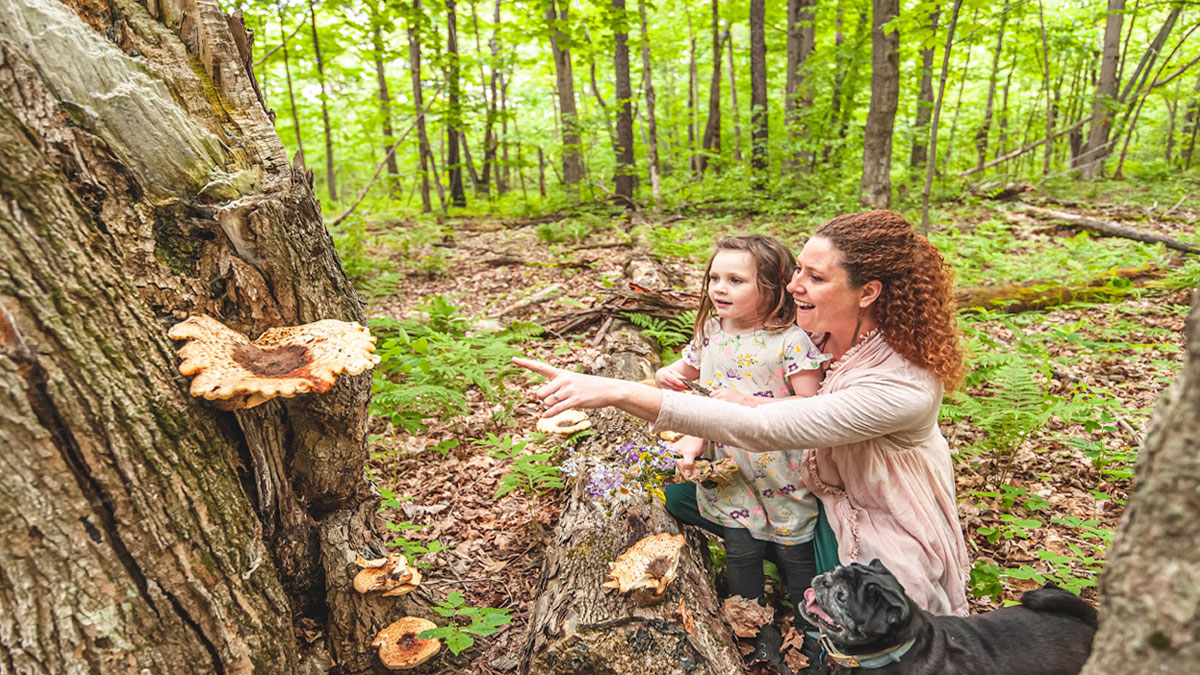
Hiking has become one of the most popular outdoor activities because you don’t need any equipment, it can essentially be cost-free. People are craving the chance to break away from screens and be outdoors to feel better physically and mentally. However, as more and more people are hiking, it can take a toll on the natural world. Here are things to keep in mind and ways you can minimize the impact on nature:preservenaturenewsstory

Take Nothing but Photos

People often take flowers, an interesting rock, or some other type of souvenir when hiking as a way to remember that hike. But can you imagine how much damage it would cause if nearly 40 million people did that when they hike every year? Take photos to remember your hike and nothing else. Leave natural things in nature where they belong.

Always Walk On the Trail

There are thousands of miles of hiking trails and if you’re hiking in a park or nature preserve that has trails, walk on those trails at all times. The trails are designed to keep you safe and to protect the ecosystems that are off the trail. If you try to create your own shortcut or path other people might start walking on your path and soon the entire area would be a mess, leading to trail washout and erosion of topsoil that provides vegetation with nutrients. So, opt not to do that. Stay on the trails.

Keep Your Dog Leashed

Dogs are fantastic hiking companions. But, they should be on a leash at all times. Dogs that are off the leash may get too excited and run off to chase wildlife, dig, bite bark or loose tree branches, and rip bushes. Take dogs on hikes, just respect the trail and others on it and keep them leashed.

Don’t Disturb Wildlife

You might see wildlife like birds, deer, rabbits, chipmunks… but never get too close and don’t try to feed them or follow their tracks. If you want to capture the memory take a distance photo with your phone and then keep on the trail.

It is always a good practice: whatever you bring with you onto trails should leave with you and whatever is there at the trails should stay as is. Leave nothing behind and don’t disturb the trail systems. Leave no trace while having fun, exploring nature and enjoying the outdoors.

This article was created by Personal Injury Law – an organization dedicated to providing the public with information about personal injury and safety information. Nothing in this article should be construed as legal advice, and it is intended for informational use only.

The Tug Hill 10 Challenge

Tug Hill 10 Cover Photo

As an opportunity to get outside and experience the many diverse landscapes and wildlife habitat in the region, this challenge is ongoing for one year to encourage you to experience the beauty of Tug Hill in all seasons.Tug Hill 10 Challenge

The challenge is for folks to document 10 walk, hike, bike, snowshoe, or paddle trails in the Tug Hill Recreation Guide then, complete our online form. Once completed, we’ll send either our Challenge Patch or Window Cling Decal (participants choice) to congratulate them on achieving this challenge.

Share your experiences with us by taking lots of photos and sharing them on social media with the hashtag #TugHill10.

Most importantly this challenge is designed for folks to have fun outdoors exploring the region so, get outside and just enjoy!


Loretta Lepkowski

Loretta Lepkowski

Loretta Lepkowski

Loretta was raised on a small dairy farm in southern Lewis County in the Tug Hill region of NYS. This upbringing in a Polish, Catholic family of nine children along with her previous careers in social work and elementary education laid the ground work for appreciation of the “salt of the earth,” resourceful and hardworking people of the north country.

Loretta and her husband, Peter Ostrum, a large animal veterinarian, settled in the area and raised two children. Along the way, she developed a passion for art, enrolled in workshops, started painting local narrative stories, and exhibited with the Central NY Watercolor Society, VIEW (Arts Center in Old Forge), North Country Arts Council, Lewis County Community Arts, Dodge Pratt Northam Art & Community Center.

This was strengthened with sponsorship of the Tug Hill Tomorrow Land Trust through a Community Arts Grant under the NYS Council of the Arts awarded in 2010.

From this grant the first traveling art show titled, “Celebrating Family Farms of the Tug Hill” was produced that featured paintings and descriptive summaries showcasing the variety of family farms within Lewis and Jefferson Counties.

The positive public response to that exhibit traveling for over six years, generated the seed for Loretta to paint a new series focusing on portraits of “The Venerable Folks of Tug Hill”. Many thanks to Loretta and the featured Venerable Folk for so generously sharing their stories to make this exhibit possible!

We Are All In This Together

A letter from Executive Director: Linda M. Garrett 

There is no doubt that life has changed dramatically for you in a very short time and I hope you and your loved ones are well and safe right now.

As we all have, I have been following the news of the COVID-19 pandemic with concern and if you are like me, you are looking for ways to help and keep your sanity too.

Staying on top of ever changing regulations to keep our amazing staff safe and working, juggling working remotely, taking care of my family at home, and checking in on distant (and not so distant) friends and family, I am also making sure to spend time outside daily.

During a recent daily sanity walk, I noticed something that touched my soul. There were families walking together and I saw kids skipping stones, climbing trees, and doing cartwheels. My hope is that we can all use this time to reconnect with each other and with nature in meaningful ways.

Doing our best to protect our community and our families, in response to public health recommendations and new information coming to light daily, Tug Hill Tomorrow is taking courses of action to do our part to limit the spread of the virus.

  • The office is closed to the public through April 30th and staff will be working remotely. Additionally, all community programs and outings are cancelled during this time.
  • Core conservation projects are proceeding. Staff is continuing to work on closing projects that are lined up, as well as continuing to assist our agricultural community by completing new dairy grant applications.
  • Land protection staff will begin annual monitoring visits and we will be working to complete field work for new projects, practicing social distancing and calling landowners ahead of time if planning to visit your property.
  • Being outside is one of the safest spaces. We all need fresh air and the land trust is encouraging outdoor learning, open windows to stem the spread of germs and, we are working on providing self-guided programs at the Joseph A. Blake Wildlife Sanctuary in Rutland for parents as another option for getting their kids outside and continuing to learn while schools are closed.

Here at the land trust, we consider the Tug Hill community our family. We remain committed to the protection of lands and appreciation of natural and cultural heritage here in Tug Hill. Part of that commitment is doing what we can to preserve the health and wellness of community members.

The land trust is currently working to identify and share possible ways we can assist in supporting our greater community. Whether it be education on the latest news regarding COVID-19 or a trip to the store for essential groceries, we encourage you to take care of yourselves, your families, your neighbors and even those you have never met that may be in need of a helping hand.

Get the latest official information on COVID-19 at:

(CDC) Center for Disease Control & Prevention 

(WHO) World Health Organization

I’d love to hear from you…

If there is anything we can do to support you during this surreal and tumultuous time, please let me know and, if you or someone you know needs direct assistance in any way, call me at 315-778-6949.

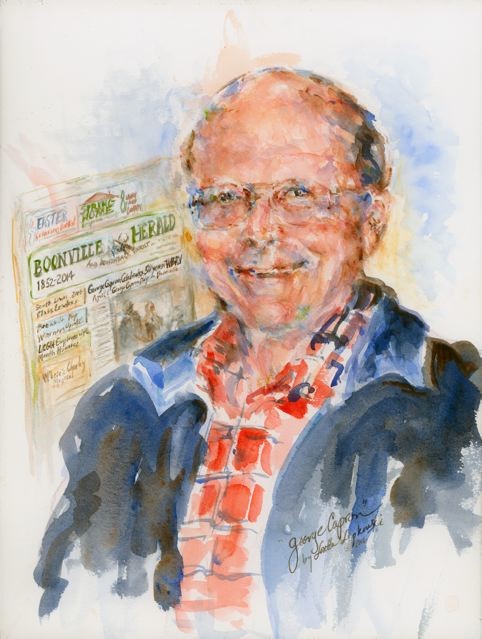
George Capron (1944-2019)

George Capron

George has been called a North Country institution, the “Voice of the North Country” (WBRV – The Moose) radio station in Boonville since 1961, when at age 19, he passed a Federal Communications test. This ended his career as a milk delivery man.

George is famous for entertaining his listeners with little “Tidbits” of information found in the Boonville Herald about life on Tug Hill and there is hardly a person in the Boonville area who hasn’t had his or her birthday or anniversary announced by George.

His family roots are from Tug Hill. His grandmother was born in Montague. His grandfather, George’s namesake, who lived in Boonville was a legend. Not only did he work as a bricklayer, he played the fiddle at dances, and was the sharp shooter for the Buffalo Bill Wild West Show. He also built a reputation making quality wooden snowshoes during the winters.

George had a crowded “wall of fame” at the WBRV Station. He was proud, but humble, about all the honors he received over the years, from broadcasting for the Oneida and Lewis County Fairs, to the Woodsmen’s Field Days Parades, to the Lost Trail Snowmobile Club, to the Elks, and finally becoming a Tug Hill Sage in 2015.


Painting by Loretta Lepkowski.

Let’s Be Mindful

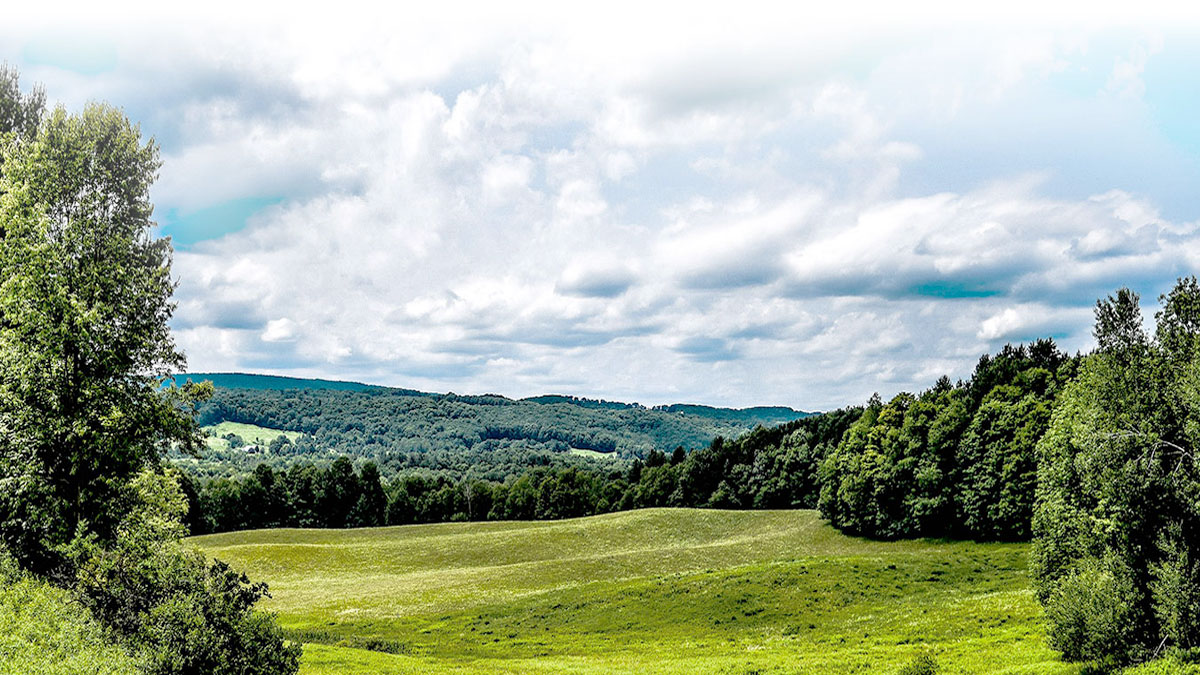
Open Field

Our Lifestyle is impacting the lands and waters we love

Guest post by: Meredith Davison, Tug Hill Tomorrow Land Trust Communication & Marketing Director

Where’s your favorite place outdoors? Is it down by the river? In the woods? Maybe it’s the local farm down the road where the cows fan out after milking on spring days?

The lands and waters you love need you as never before. That’s why it’s so important that we all step up and do something good for the environment we share.

Reflecting on this, do you wonder sometimes, like I do, where to start? Or, maybe you don’t have the time to volunteer or funds to donate? There’s still a lot you can do.

I thought i’d share some things that I have found helpful.

Let’s start with reducing the pollution that is warming our world and changing the climate. The amount of greenhouse gas pollution continues to rise, with the Small Acts Quoteimpacts being felt by all of us, but especially by farmers. Flooding, late crop plantings, erratic weather and increased blights are impacting food sources.
It’s also impacting wildlife. If we don’t get the climate polluting gases under control in the coming years, we could lose millions, even billions of birds. For us, that means a loss in pest control, public health, seed dispersal, and ecotourism, just to name a few.

I’ve wanted to figure out how we can help. Carbon dioxide, one of the key climate polluting gases, is often emitted by the burning of fossil fuels to create a product, undertake an activity or by transportation. The U.S. contributes to 25% of the world’s greenhouse gasses and the average American buys items that result in 20 tons of carbon dioxide each year.

Why do we care about this? The earth and our ecosystems are changing in extreme and undesirable ways. Altering landscapes, warmer temperatures, wildfires, displaced wildlife and even wildlife on the verge of extinction are all current effects taking place.

Nothing separates us from our unity with, and the need for, a healthy well-balanced environment. Not religion, politics, economic status. Nothing. If you like fresh air, this matters to you. If you enjoy traveling, nature, scenic views, clean water and wholesome foods, this matters to you.

So here are some easy things I have found that I can do, and I thought maybe you could too:

  • Stay away from using single-use plastic bags and water bottles as much as possible. Most everything you use a plastic bag for can be substituted with glass containers, mesh bags, canvas bags, or biodegradable bags made of hemp or paper. And, using a reusable aluminum or steel bottle reduces the landfill and recycling burden while also saving you money. There are so many statistics regarding the negative and harmful effects of plastics if you just research it. Plastics are choking the oceans—and right here on Tug Hill you see them tangled in our fields and woods.
  • Think before you buy. Consider thrift shopping or antiquing, and any product that can be recycled – recycle it. 20-50% of everything we buy ends up in a landfill. I ask myself, do I really need this item that will one-day end up in a land fill? How can I find joy in re-purposing furniture, clothing, and house-hold items?
  • Turn off the tap. By doing this when brushing your teeth or washing your hands, it saves an average household 10 gallons of water a day. While we have a lot of water here in Tug Hill, we need to treasure clean water. Periods of summer droughts, followed by heavy downpours, are predicted to increase with climate change.
  • Ride a bike, walk, or carpool when possible. Doing this reduces the amount of fuel burned and CO2 emissions in the atmosphere. Yes, I get it. It’s not easy in a rural area like ours. But we can still pitch in when we can and at the least consider transportation impacts. I have found it’s actually fun to think about how I can do this more.
  • Shop what’s in season at local markets (and grow your own garden). Food in the grocery store travels an average of 1,500 miles to reach your plate—using a lot of gas (if trucked) to get it here. Buying (or growing) local food benefits your health, reduces CO2 emissions from reduced gas usage, and gives an important boost to local farmers and the local economy. I love this about Tug Hill. We have such great farms, you can find local farmer’s markets near you.
  • Compost. Composting keeps biodegradable materials out of landfills and promotes healthy plants by creating nutrient rich soil – reducing use of pesticides and fertilizers in gardens. Methane gas is released when food isn’t composted—a powerful greenhouse polluting gas. You can make a big difference by composting common kitchen waste (like coffee grounds, tea, egg shells, and fruits/veggies) in your own backyard. I admit this is a challenge depending on where you live but I have started with a small bin in my backyard and, there are indoor compost bins as an option for those who may not have a yard.
  • Plant Trees. Trees can absorb a tremendous amount of carbon dioxide emissions. If you don’t have resources to plant a tree, there are many organizations you can volunteer with or donate to that are aiming to erase carbon emissions and improve the environment by planting trees. You can even plant trees in someone’s honor – making for a wonderful gift in lieu of traditional presents. I don’t have a way to plant trees where I live but I have found planting trees in someone’s honor through other organizations does make a personal and unique gift.

Together, we can all make a difference. I encourage you to research and learn as much as you can about greenhouse gases, carbon dioxide and climate change so you can decide for yourself what is at stake and ways you can improve your daily routine to benefit yourself, and the environment world-wide. Your lifestyle is the one variable you can control that impacts our ecosystems.

On behalf of the farms, wildlife, people and places you love—and future generations – please, start where you are and do what you can manage. For those of us who love Tug Hill, it’s part of what we can do together.

I’d love to hear from you…

Meredith Davison

For tips and encouragement on being a good steward of the environment and living a lifestyle rich of environmental-mindfulness, connect with me (Meredith) at [email protected] or 315-779-8240.